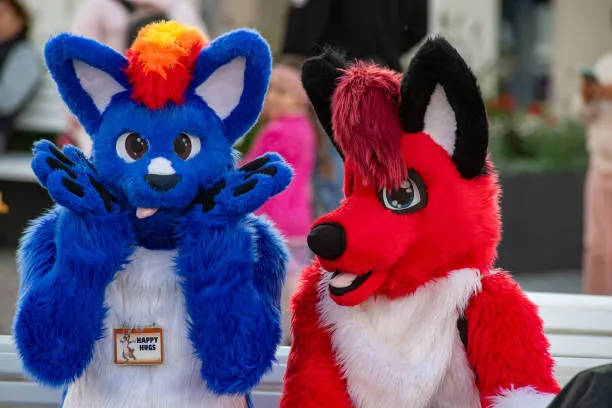
The biggest furry and pup community trends in 2026 are not one costume style, one convention, or one viral argument. The larger story is how people are building a connected culture across conventions, VRChat, Discord, creator platforms, small newsrooms, art tables, pup meetups, and community-run safety systems.
The furry fandom has always been decentralized. No single organization decides what the fandom is, what every fursona means, or how every local group should operate. That decentralized shape is exactly why the culture can feel enormous and intimate at the same time. A person may discover furry art through a short video, attend a convention months later, join a VRChat group that evening, and eventually find a small Discord where they finally feel known.
Pup spaces add another layer. Some people use pup language as playful social expression. Some connect it to a canine fursona, hood, collar, bandana, role, mannerism, or chosen name. Some are adjacent to human pup culture. Others simply enjoy puppy-coded humor, affection, energetic friendship, and pack language without treating it as one rigid identity.
That mixture produces creativity, connection, and occasional confusion. The healthiest communities are learning to explain themselves clearly without sanding away everything unusual.
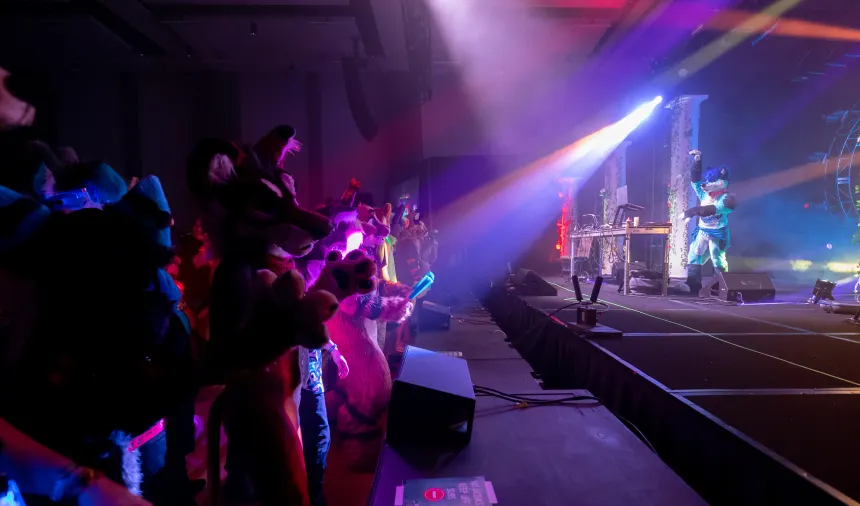
This report examines the furry and pup community trends visible across 2026, what they mean for newcomers and organizers, and how communities can grow without turning every interaction into a performance contest.
Why furry and pup communities feel more visible in 2026
The fandom is not suddenly appearing from nowhere. Its activities are becoming easier to discover, document, and share.
A convention announcement once lived mainly on a website, mailing list, or forum. Now one registration update may travel through Bluesky, Telegram, Discord announcement channels, TikTok, YouTube, convention apps, creator streams, and community news pages within hours. The result is a continuous furry news cycle.
This matters because fandom culture no longer pauses between conventions. Registration tiers, hotel blocks, guests, charity totals, parade photos, dance competitions, creator releases, film projects, safety updates, and community debates all become stories.
Official convention websites remain the best source for rules, dates, and registration. Community news outlets then translate those announcements into a format people actually notice. The source-linked post style used by Furry Refuge News is one example: a recognizable visual, a compact summary, visible author attribution, and a direct link to the original article.
That model is useful because it gives people a quick signal without pretending the repost is the original reporting.
The trend is not just “more furry news.” It is distributed furry news:
- Official organizers publish the authoritative information.
- Community news pages summarize and contextualize it.
- Creators react through short-form video and livestreams.
- Attendees add firsthand experiences.
- Discord and Telegram channels circulate the update.
- Searchable websites preserve the durable version.
A healthy ecosystem keeps those layers separate. The convention website should not be replaced by a screenshot. A community summary should not erase the original author. A reaction video should not present rumor as confirmed fact.
Micro-news channels are becoming fandom infrastructure
Small news channels may have only a few subscribers at first, but their structure can still be powerful.
A well-run furry news channel does three things quickly:
- It tells readers why the update matters.
- It credits the person or organization that produced the original material.
- It sends the reader to the source.
This is especially valuable in a fandom where many announcements are temporary. Social posts vanish into a feed. Discord announcements become difficult to locate. Convention registration graphics are reposted without context. A small editorial page can act as a bridge between the fast feed and the permanent record.
The best posts resemble useful field notes rather than content-farm sludge. They may cover:
- Convention registration openings
- Hotel booking windows
- Attendee tier changes
- Charity and attendance statistics
- Fursuit parade results
- Dance competition clips
- Furry film and documentary releases
- Creator interviews
- Community safety changes
- VRChat group announcements
- New furry games or server events
- Art, music, writing, and performance releases
The screenshots that inspired this article show the strength of consistency. A repeated card format makes the source, headline, image, and summary predictable. Readers do not need to decode a new layout for every update.
For Mello Zone, that same principle can support a broader editorial system. The Mello Zone Blog can hold long-form guides and analysis, while shorter updates can lead readers toward the relevant furry convention culture hub, community resources, or official source.
The important word is lead. A news summary should open the door, not lock the original publisher outside.
Convention culture now runs all year
Furry convention culture used to feel seasonal to outsiders. Today, convention communities operate on a nearly continuous calendar.
The cycle often looks like this:
Theme announcement
→ registration launch
→ hotel information
→ vendor applications
→ panel submissions
→ volunteer recruitment
→ guest reveals
→ schedule release
→ live convention
→ photos and results
→ charity totals
→ feedback
→ next-year announcement
Each stage creates useful reporting.
For example, the official Furlandia 2026 page published final attendance, parade, vendor, sponsor, and charity statistics after its May event. Those figures are not merely victory numbers. They tell artists about market size, help future volunteers understand event scale, and give attendees a snapshot of what the community built together.
Registration pages are stories too. Anthrocon’s registration information explains tier differences and attendee options. Anthro New England provides another official destination for people planning future convention travel. Useful community reporting should direct readers back to those official pages instead of reposting prices without the terms and dates that give them meaning.
What convention readers actually need
A good convention update answers practical questions:
- What changed?
- When does it take effect?
- Is the date confirmed?
- Which tier or attendee group is affected?
- Is the hotel block open?
- Is the linked site official?
- Does the information apply to this year or next year?
- Is the post reporting, commentary, or a personal experience?
- Where can the reader verify the information?
This seems basic, but it separates service journalism from hype.
A blurry registration chart with no source may generate urgency. A clear explanation with an official link generates trust.
Furry conventions are becoming multi-format media events
The convention itself is only one layer of the experience.
Creators now document conventions through:
- Daily vlogs
- Fursuit dance videos
- Photo essays
- Artist Alley tours
- Panel recaps
- Accessibility reviews
- Hotel and travel explainers
- First-con stories
- Convention safety guides
- Livestreams
- Short comedy sketches
- Documentary-style interviews
That creates a second life for convention culture. Someone who cannot travel may still discover artists, dances, mascots, charity work, and community stories.
It also creates responsibilities. A convention video should respect recording rules and attendee boundaries. A photograph should credit the photographer when known. A dramatic title should not misrepresent what happened. A creator covering a dispute should distinguish firsthand observation from social-media retelling.
Mello Zone’s event safety guide is relevant here because recording, livestreaming, crowd management, moderation, and evidence handling are increasingly part of community event production rather than separate technical concerns.
The creator who films the event is not outside the community system. They are one of the people shaping how the event will be remembered.
What “pup” means in furry spaces
One reason furry and pup discussions become tangled is that people expect one universal definition.
There is no single doorway.
In furry spaces, pup language may describe:
- A canine fursona
- A playful social role
- Puppy-like mannerisms or humor
- A hood, collar, harness, bandana, or tag
- Pack-oriented friendship language
- A chosen community identity
- An overlap with adult human pup culture
- A VRChat avatar persona
- A content-creator character
- A way to express affection, energy, softness, loyalty, or chaos
Those meanings can overlap, but they are not interchangeable.
A person with a canine fursona is not automatically a human pup. A person who calls themselves a pup is not necessarily making a statement about kink. A hood can be personal, social, aesthetic, ceremonial, performative, or adult depending on context. A collar can mean fashion, identity, relationship, community, or nothing beyond liking the look.
The best beginner approach is curiosity without entitlement.
Ask:
- What does pup mean to you?
- Is this a public SFW context?
- What terms do you prefer?
- Is the gear touchable?
- Are photos welcome?
- What boundaries should I know?
Do not ask someone to explain their private life merely because they use a visible symbol.
Mello Zone’s furry pup, pup play, and pet play explainer exists because the communities can share language while still having different histories and expectations. The beginner guide to furry pup communities gives newcomers a broader starting point.
The 18+ SFW model is becoming more important
One of the most useful community models in 2026 is the 18+ SFW space.
The phrase can sound contradictory until its purpose is explained.
18+ describes who may join.
SFW describes what public content and behavior are permitted.
An adult-only community may choose an 18+ membership rule for many reasons:
- Moderation capacity
- Adult social boundaries
- Mature life experiences
- Legal and operational simplicity
- Reduced age ambiguity
- Clearer expectations around relationships and private communication
- A desire to keep public spaces non-explicit while serving adults
That does not make every conversation sexual.
An 18+ SFW furry or pup space may focus on:
- VRChat meetups
- Gaming nights
- Art sharing
- Fursuit making
- Convention planning
- Creator support
- Music and dance
- Mental-health resources
- Community service
- Casual social connection
- Pup humor and non-explicit gear expression
The community must still explain its rules. “Adults only” should never become an excuse for harassment, coercion, unsolicited explicit material, or careless privacy practices.
A strong 18+ SFW policy states:
- What SFW means in that community
- Which content is prohibited
- Whether non-explicit pup gear is permitted
- How consent and personal boundaries work
- How age verification works
- What moderators retain
- How reports and appeals are handled
- Which public channels may be recorded or streamed
The Mello Zone community manifesto and Safety Center can support that kind of public explanation. Rules build more trust when people can read them before joining.
VRChat is becoming social infrastructure, not just a game
For many furry users, VRChat is not simply entertainment software. It is a place where identity, friendship, performance, art, community events, and everyday social life intersect.
A furry community may use VRChat for:
- Weekly social meetups
- Pup nights
- Dance events
- Quiet hangouts
- World tours
- Avatar showcases
- Creator interviews
- Supportive check-ins
- Convention afterparties
- Photography
- Streaming
- Staff training
- Community announcements
VRChat Groups provide an organizational layer for roles, announcements, membership, and group instances. The official VRChat Groups guide explains the platform feature, but the culture around a group is still built by people.
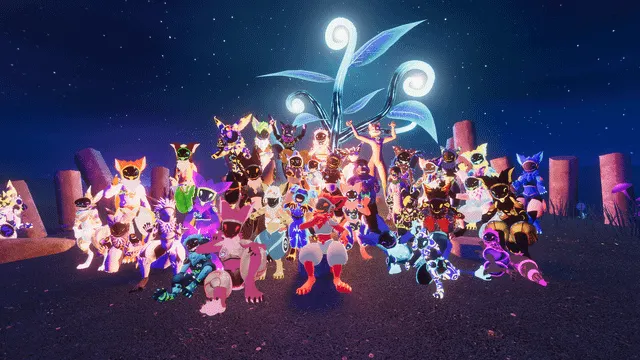
A world can communicate community values
A well-designed community world can teach visitors how the group operates without dropping a wall of legal text on them.
Useful world elements include:
- A clear welcome point
- Rules in readable language
- Visible event information
- Quiet zones
- Accessible navigation
- A staff contact board
- Portal controls
- Recording notices
- Content-rating reminders
- Links to official community resources
- A report pathway
- An honest explanation of 18+ SFW expectations
The world itself becomes an onboarding document.
The trend is moving away from “join this instance and figure it out” toward intentional social architecture. A newcomer should know where to go, how to ask for help, and what behavior the hosts expect.
Mello Zone’s VRChat furry pup community guide covers the avatar, event, pack, and safety side in more detail.
Furry creators are becoming community correspondents
The line between creator and reporter is blurry inside a participatory fandom.
A furry creator may be:
- A fursuiter
- An artist
- A photographer
- A DJ
- A dancer
- A convention attendee
- A world builder
- A moderator
- A streamer
- A pup community member
- A commentator
- A news curator
That closeness can produce excellent work. Creators understand the vocabulary, social cues, and significance of events that outside coverage may miss.
It can also create conflicts. A creator may cover friends, sponsors, collaborators, or communities they moderate. That does not make the work invalid, but the relationship should be disclosed when it matters.
A practical standard is:
What did I observe?
What did the source say?
What is my interpretation?
What relationship do I have to the subject?
What can the reader verify independently?
The strongest community journalism is comfortable naming those layers.
Attribution is not optional decoration
The screenshot-driven news format works because the original post is visible. The reader can follow the trail.
Every curated post should preserve:
- Original author
- Original publisher
- Source URL
- Publication date when known
- Image credit
- Whether the summary is quoted or paraphrased
- Whether the curator added commentary
- Any relevant relationship or sponsorship
Mello Zone’s creator attribution and reposting guide treats credit as part of the content, not a footer ritual.
A backlink is useful when it helps the reader reach the source. It should not be hidden behind vague anchor text or used as a decorative SEO token.
The furry creator economy is getting more interconnected
The furry creator economy is not one market. It is a network of small creative businesses and community-supported practices.
It includes:
- Character commissions
- Reference sheets
- Badges
- Stickers
- Plush work
- Fursuits
- Music
- DJ sets
- Photography
- Video editing
- World creation
- Avatar assets
- Textures
- Writing
- Convention vending
- Streaming
- Membership support
- Ko-fi and Patreon communities
- Merch collaborations
A creator may move between several of these in one year.
The most visible trend is not simply monetization. It is relationship-based creative work. Customers often follow the artist, maker, or performer as a person. They may discover a creator through a convention post, watch their stream, join their Discord, commission art, and meet them later at an event.
That relationship makes transparency important.
Creators should clearly explain:
- What is being sold
- Who owns the result
- Whether commercial use is allowed
- How revisions work
- Expected delivery windows
- Refund or cancellation rules
- Whether AI tools are used
- How customer references are stored
- Whether finished work may be posted publicly
Communities can support creators without turning every channel into an advertisement feed. The Mello Zone creator guidelines provide one framework for permission, attribution, SFW presentation, and clear offers.
Pup creators are building recognizable identities
Pup creators often use a highly readable character language:
- A consistent name
- A color palette
- A hood or canine avatar
- A collar, tag, or harness
- Repeated verbal mannerisms
- Paw gestures
- Pack jokes
- Friendly chaos
- Comfort-oriented or affectionate content
- Community questions
- Convention and VRChat clips
The strength of that format is recognizability. A viewer can identify the creator within seconds.
The risk is becoming trapped by the character. Creators still need room to be serious, tired, uncertain, private, or different from the version that performs best.
A sustainable pup creator strategy should separate:
Public character
Private person
Community role
Business role
Moderation authority
Personal relationship
Those roles can coexist, but the audience should not be encouraged to treat access to content as access to the creator’s private life.
Pup events are shifting toward low-pressure participation
Not every successful event needs a stage, competition, or packed agenda.
Pup community events often work best when people can enter gently.
Examples include:
- Coloring tables
- Toy and gear show-and-tell
- SFW pup socials
- Quiet pack lounges
- VRChat world crawls
- Avatar photo sessions
- Pupsona drawing nights
- Bandana or tag crafting
- Convention meetups
- Beginner Q&A sessions
- Consent and etiquette workshops
- Gaming nights
- Cartoon watch parties
- Walk-and-talk meetups
- Creator showcases
These formats reduce the pressure to perform an identity correctly.
A newcomer may not own gear. They may not know common vocabulary. They may be shy, disabled, socially anxious, or attending without a friend. A low-pressure event gives them something to do before asking them to socialize.
The pup hoods, collars, bandanas, and gear guide is useful because visible gear often attracts questions. Good etiquette begins with asking before touching, photographing, borrowing, or interpreting someone’s equipment.
Consent language is becoming everyday community language
Consent education is no longer limited to adult workshops. Healthy communities use boundary language in ordinary SFW interactions.
Examples:
- Ask before hugging
- Ask before touching ears, tails, hoods, collars, tags, or fursuits
- Ask before taking a close-up photo
- Respect a person who steps away
- Do not pressure someone to bark, pose, roleplay, or perform
- Do not assume pack language creates authority
- Do not treat a playful demeanor as unlimited access
- Keep private dynamics out of public spaces unless everyone involved agrees
This language should feel normal, not ominous.
A visible “ask first” culture gives people small, repeatable actions. It also helps moderators intervene before a boundary problem becomes a major incident.
The strongest communities do not merely say “consent matters.” They design spaces where asking is easy and refusal is socially safe.
Safety systems are becoming part of community identity
A community used to advertise itself with a logo, theme, and event calendar. Increasingly, people also judge it by its systems.
They ask:
- Are the rules public?
- Can I report privately?
- Are moderators identified?
- Is there an appeal process?
- Does the community protect evidence?
- How does age verification work?
- Is there a privacy policy?
- Are creator permissions respected?
- Can staff be held accountable?
- Does the group explain policy changes?
These are not boring administrative details. They shape whether people feel safe enough to participate.
Discord notes that automated moderation can support human teams rather than replace them, and that different communities need different levels of verification, anti-spam, and anti-raid protection. The official Discord Auto Moderation guide is useful background for organizers.
VRChat’s Community Guidelines remain the platform baseline for conduct. A community can add its own rules, but it cannot use a private instance as a permission slip for harmful behavior.
For meetup organizers, the Mello Zone event safety guidelines provide a longer workflow for staffing, evidence, reporting, privacy, recording, and appeals.
Specificity is replacing vague inclusivity slogans
“Everyone is welcome” sounds warm, but no functioning community literally permits every behavior.
The stronger trend is specific welcome language:
- Adults from many furry subcultures are welcome
- Pup expression is welcome within SFW public rules
- LGBTQ+ members are welcome
- Newcomers may ask basic questions
- Disabled attendees may request accommodations
- Harassment is not welcome
- Coercion is not welcome
- Unsolicited explicit content is not welcome
- Hate speech is not welcome
- Retaliation against reporters is not welcome
Specificity protects inclusion from becoming meaningless branding.
It also helps people decide whether the community fits them. A person should not need to join a private Discord and surrender personal information before learning the public rules.
Mello Zone explains its broader model through the community hub, accessibility page, and the dedicated You Matter LGBTQ+ resource directory.
Social platforms distribute the story, but websites preserve it
Fast feeds are excellent for discovery. They are poor archives.
A useful furry publishing system gives every format a job:
| Platform | Best use |
|---|---|
| Telegram or Discord announcements | Immediate subscriber updates |
| Bluesky or X | Public conversation and rapid sharing |
| TikTok or Shorts | Discovery, personality, visual hooks |
| YouTube | Longer documentation and searchable video |
| Website or MDX blog | Canonical article, sources, corrections, durable search |
| Newsletter or RSS | Direct delivery without algorithm dependence |
| VRChat group | Event and community coordination |
The website should be the stable center.
That does not mean every social post needs a 4,000-word article. It means important information should have a permanent version somewhere the community controls.
A convention registration graphic may need a 200-word update. A community controversy may need a sourced correction. A safety guide may need templates and detailed steps. A creator interview may need the full context that a short caption cannot hold.
Format should follow the job.
What rapid-update furry news gets right
The card-based rapid-update style shown in community channels has several strengths.
It makes scanning easy
Readers can identify the image, headline, source, and link quickly.
It encourages source visibility
A labeled “Original Post” link reminds readers that the summary came from somewhere.
It supports frequent publishing
The repeated template reduces production friction.
It creates a community habit
Subscribers know what kind of update to expect.
It helps smaller stories travel
A registration update or creator announcement may not need a massive editorial production to be useful.
Mello Zone can borrow that rhythm without copying another publisher’s voice or artwork.
A good Mello Zone short update might use:
MZ SIGNAL: concise headline

What happened:
One or two sentences.

Why it matters:
One sentence for the furry, pup, creator, or convention audience.

Source:
Clear official or original link.

Read more:
A durable Mello Zone explainer when one exists.
That creates a bridge from the fast card to the deeper article.
What rapid-update furry news must improve
Speed can flatten context.
Common problems include:
- Posting an announcement without checking the year
- Sharing a registration price without the deadline
- Cropping out the publisher
- Using a creator’s image without permission
- Repeating a rumor as a headline
- Summarizing a controversy without linking the full statement
- Treating a promotional claim as verified reporting
- Publishing private Discord screenshots
- Using machine-written summaries without reviewing names and facts
- Leaving outdated posts live without a correction
The fix is not to stop publishing quickly. The fix is a light editorial checklist.
Before posting:
Is the source original?
Is the date current?
Is the image authorized?
Is the summary accurate?
Is the link working?
Is a relationship disclosed?
Could the wording expose private information?
Does the post need an update date?
Five minutes of checking can prevent weeks of cleanup.
Building a trustworthy furry and pup news desk
A small editorial team can publish professionally without pretending to be a giant newsroom.
Use clear content labels
Label posts as:
- News
- Official announcement
- Community update
- Creator spotlight
- Interview
- Guide
- Opinion
- Correction
- Event recap
- Sponsored or partner content
Keep a source ledger
Record:
- Source URL
- Publisher
- Author
- Date accessed
- Image permission
- Important claims
- Later corrections
Separate reporting from reaction
A post can include analysis, but readers should know where the source ends and the editorial voice begins.
Preserve corrections
Do not quietly replace a major factual claim. Add a correction or update note explaining what changed.
Avoid artificial urgency
“Register now” may be appropriate when a deadline exists. “Everyone is talking about this” is usually empty pressure.
Protect community members
Do not publish private names, reports, screenshots, or identifying details because they make the article more dramatic.
Link naturally
An internal link should help the reader continue the subject. An external link should help them verify or explore the source. Neither should feel stapled onto a sentence for search engines.
Mello Zone’s editorial policy and transparency page can give readers a public standard for this work.
How Mello Zone can connect long-form and short-form content
The strongest publishing loop is circular.
Official source or community event
→ short update
→ deeper MDX article
→ social video or discussion
→ reader questions
→ correction or follow-up
→ topic hub
A long article should create smaller pieces:
- A quote card
- A 30-second explanation
- A checklist graphic
- A community question
- A myth-versus-context post
- A source thread
- A short Telegram summary
- A VRChat discussion prompt
Short content should then point back to the durable article.
For example, this trend report can produce:
Why 18+ does not mean NSFW
What pup means in furry spaces
Five rules for reposting furry news
Why VRChat worlds are community infrastructure
How to credit a furry creator correctly
What makes a pup meetup newcomer-friendly
Each piece serves a different entry point while sharing one editorial foundation.
A newcomer checklist for furry and pup spaces
Newcomers do not need to memorize the fandom before participating.
Use this sequence:
- Read the public rules.
- Learn whether the space is all-ages, 18+ SFW, or adult.
- Observe how members use pup and pack language.
- Ask before touching gear, fursuits, or avatars in ways that cross personal space.
- Verify event details through the official source.
- Keep your private information private.
- Use block, mute, and report tools when needed.
- Do not assume one community represents the entire fandom.
- Credit artists, photographers, and writers.
- Leave spaces that pressure you to ignore your boundaries.
The guide to joining a furry pup community safely expands this into a fuller privacy and red-flag checklist.
Belonging should not require instant intimacy. Good communities allow relationships to grow at human speed.
An organizer checklist for sustainable growth
Growth can create impressive numbers and fragile systems at the same time.
Before expanding, ask:
- Can staff moderate the next hundred members?
- Are event hosts trained?
- Is the onboarding understandable?
- Are rules applied consistently?
- Can members appeal a decision?
- Are creator permissions documented?
- Are images and articles credited?
- Can the website handle updates without one person?
- Are community metrics tied to useful outcomes?
- Can moderators take breaks?
- Is the 18+ process privacy-aware?
- Do members know which source is official?
A community is not healthy merely because the Discord member count rises.
Useful growth metrics include:
- Returning event attendees
- Report response time
- Appeal completion
- Volunteer retention
- Creator participation with permission
- Newcomer questions answered
- Accessibility requests fulfilled
- Broken links repaired
- Articles updated before review deadlines
- Members who feel comfortable saying no
Those measurements are quieter than follower counts, but they describe whether the social structure actually works.
Furry and pup community trends likely to grow next
Trend predictions are not guarantees, but several directions are already visible.
More creator-led local reporting
Attendees with phones, cameras, and community knowledge will keep documenting conventions and meetups. Strong attribution will become a competitive advantage.
More permanent topic hubs
Communities will organize guides around safety, conventions, identity, creators, and VRChat rather than letting every useful explanation vanish in chat.
More 18+ SFW spaces
Adults who want clear age boundaries without explicit public content will continue building communities around that distinction.
More VRChat group infrastructure
Groups, worlds, roles, and scheduled instances will increasingly operate like digital community centers.
More transparent creator relationships
Audiences will expect sponsorships, free products, partnerships, and backlink arrangements to be disclosed.
More pup-friendly beginner programming
Low-pressure socials, etiquette guides, crafting, art, and Q&A formats will make pup communities easier to enter without demanding instant performance.
More correction culture
Community publications will be judged not only by whether they get everything right initially, but by whether they correct mistakes clearly.
More cross-platform publishing
A single story will move through website, Discord, Telegram, Bluesky, video, RSS, and VRChat announcements while retaining one canonical source.
What these 2026 trends change for communities
The most important furry and pup community trends in 2026 are about infrastructure and connection.
- Furry news is becoming continuous and distributed.
- Convention culture now produces year-round stories.
- Small source-linked news channels can become useful community infrastructure.
- Pup identity has several meanings and should be explained through context rather than assumption.
- 18+ SFW communities separate adult membership from explicit public content.
- VRChat worlds and groups increasingly function as digital community centers.
- Creators are also correspondents, organizers, and cultural archivists.
- Attribution and disclosure matter more as creator relationships become commercial.
- Low-pressure pup events make participation easier for newcomers.
- Consent language works best when it becomes ordinary.
- Safety, appeals, privacy, and transparency are part of the community brand.
- Social platforms distribute stories, while websites preserve them.
- Growth should be measured by trust and sustainability, not only audience size.
The future of the furry and pup community is not one unified scene. It is a network of overlapping rooms. The communities that thrive will be the ones that help people understand which room they are entering, who created what they are seeing, how to participate respectfully, and where to go when they need support.
Mello Zone observations behind this trend report
This report is one part of the work published from the Mello Zone home, not a generic summary assembled apart from community life. The Mello Zone editorial promise explains how that work is sourced and corrected. Our analysis of furry fandom myths, trauma, refuge, and belonging, and identity-based subcultures shows where broad cultural claims need more care than a definition page can provide.
For a first-person social-VR example, read The Reality of Hope, which grounds the larger trend in an actual Mello Zone friendship and VRChat experience rather than treating virtual community as an abstract platform feature.
Questions about the 2026 furry and pup landscape
What is a furry pup community?
A furry pup community is a social space where furry identity and puppy-coded expression overlap. Members may use canine fursonas, pup names, avatars, gear, pack language, playful mannerisms, or connections to human pup culture. The exact meaning varies by person and community.
Is every pup community NSFW?
No. Some pup communities are explicitly adult or kink-oriented, while others are SFW social spaces. An 18+ SFW community limits membership to adults while keeping public content non-explicit. Read the specific community rules rather than assuming from the word pup.
Why are VRChat furry communities growing?
VRChat allows people to socialize through avatars, build worlds, schedule group instances, host events, take photographs, stream, and express identity without needing physical travel. It combines community space, creative platform, and social performance.
What makes a furry news website trustworthy?
A trustworthy furry news website links original sources, credits authors and images, distinguishes reporting from opinion, includes dates, avoids private information, discloses relationships, and publishes visible corrections.
How should furry news accounts repost creator work?
Ask for permission when needed, retain the creator’s name, link the original page, avoid removing watermarks, describe whether text is quoted or summarized, and do not imply ownership of another person’s reporting or artwork.
What are good beginner pup events?
Coloring, crafting, SFW socials, avatar photography, gear etiquette Q&A, VRChat world tours, casual gaming, cartoon watch parties, and newcomer meetups are accessible formats because they give attendees an activity without demanding immediate social performance.
How can organizers keep an 18+ furry community SFW?
Publish a clear definition of SFW, limit explicit content, train moderators, use age-gated roles carefully, protect verification data, provide report and appeal pathways, enforce consent rules, and separate public community activity from private adult dynamics.
Where can people learn more about furry community culture?
Start with FurScience for research-oriented context, official convention websites for event details, the Mello Zone resource library for community guidance, and Mello Zone’s furry pup topic hub for related articles.
Why this article exists
The Mello Zone contribution: Mello Zone combines current fandom research, convention signals, pup-community experience, creator practices, VRChat participation, and moderation concerns into one cross-community trend analysis.
by Mello Zone Editorial Team.
Connected the trend report to Mello Zone's firsthand social-VR story, editorial promise, community analysis, and public home so its original contribution is explicit. Corrected the image alternative text to describe the displayed artwork; reporting and source-review dates are unchanged.
Read our sourcing, AI-assistance, and corrections policy.