Editorial scope: This is an educational 18+ SFW article. It acknowledges adult subcultures without providing explicit instruction or treating visible identity as consent.
The quick answer: the phrase furry pup community can describe adults whose furry identity, fursona, avatar, or social style is canine and puppy-coded. It can also refer to the overlap between the furry fandom and human pup culture. Those circles touch, but they are not interchangeable.
Someone may call themselves a furry pup because their fursona is a dog, fox-dog hybrid, wolfdog, hyena with puppy energy, or another playful canine character. Another person may use “pup” as a social identity connected to adult human pup play. A third person may enjoy both communities while keeping their public participation completely safe for work. The most respectful starting point is curiosity without assumption.
For a direct comparison, read furry pup vs. pup play vs. pet play. Newcomers can continue with the safe joining guide, pup hood and gear guide, and VRChat furry pup guide. Mello Zone’s separate verification guidance and community rules explain the local access and conduct boundary.
What does “furry pup community” mean?
There is no single organization that owns the phrase. In everyday online use, it usually points toward one of three experiences:
-
Canine furry identity: a person has a dog-like fursona, puppy-coded avatar, or playful canine presentation within the furry fandom.
-
Human pup culture: an adult role-play and social subculture in which participants may adopt pup mannerisms, names, gear, pack language, or handler relationships.
-
Community overlap: adults who participate in furry spaces, pup spaces, leather spaces, LGBTQ+ spaces, VRChat, conventions, art communities, or several of these at once.
FurScience describes the furry fandom as a broad community centered on interest in anthropomorphic animals, creative expression, characters, art, and social connection. Research on human pup play describes a separate adult subculture with social, identity, playful, and sometimes sexual dimensions. A person can belong to either, both, or neither while still enjoying canine characters.
A furry pup is not automatically a human pup
Within the furry fandom, “pup” may simply communicate species, personality, or aesthetic. A furry pup might draw a floppy-eared character, wear a partial fursuit, use a canine VRChat avatar, bark as a joke among friends, collect collars as character accessories, or build content around cheerful puppy energy. None of that automatically announces a kink role, relationship preference, or invitation for intimate conversation.
This distinction matters because people often read too much into visible symbols. A collar may be costume design. A bandana may be a pride accessory. A hood may be part of adult pup culture. A canine avatar may be nothing more complicated than “I like dogs.” The object does not give strangers permission to decide the wearer’s meaning for them.
Human pup culture is an adult subculture with its own history
Human pup play is generally discussed as an adult form of role-play connected to broader pet play, leather, and BDSM histories. Academic research has also documented that participants may experience it as social connection, identity, stress relief, embodiment, or community, not only as sexual activity. That complexity is important, but it does not erase the adult context.
In an 18+ SFW community, people can acknowledge that pup culture exists, discuss identity and community in an educational way, and express a non-explicit pup aesthetic. Explicit role-play, fetish solicitation, pornographic media, or pressure to move into intimate interaction remains outside the public SFW boundary. The age label and the content label answer different questions.
Where furry and pup communities overlap
The overlap is easy to understand once the communities are viewed as neighboring neighborhoods rather than one giant room. Both can involve chosen names, animal-inspired self-expression, art, gear, playfulness, online communities, conventions, photography, and finding people who understand an unconventional interest. Both can also offer a break from ordinary social performance.
The differences sit in the center of gravity. Furry culture is primarily a fandom built around anthropomorphic characters and creative participation. Human pup culture is an adult role-play and identity subculture with roots in leather and kink communities. Furry participation does not require animal role-play, and pup participation does not require a fursona or fursuit.
What does a pupsona mean?
A pupsona is an informal term. Some people use it for a canine fursona. Others use it for the name, markings, temperament, colors, or role they adopt as a human pup. The term can therefore behave like a bridge between communities.
A useful pupsona description can include:
-
a chosen name and pronouns;
-
species or breed inspiration without claiming literal biological identity;
-
colors, markings, badges, bandanas, or collar-tag design;
-
playful traits such as curious, shy, protective, energetic, sleepy, or chaotic;
-
communication preferences, including voice, text, gestures, or avatar chatbox;
-
public boundaries, such as “SFW interaction only” or “ask before photos and touch.”
No expensive gear is required. A text profile and a simple character sketch can carry more meaning than a shopping cart full of accessories.
Consent belongs in ordinary community interaction
Consent is often discussed only when a topic is sexual, but community consent begins much earlier. It applies to hugs, head pats, boops, barking at someone, role-play prompts, nicknames, photography, screenshots, streaming, direct messages, touching a hood or tail, reposting art, and pulling someone into a private group.
RAINN describes consent as clear, voluntary, and free from pressure. In a social furry or pup setting, the practical version is simple: ask a specific question, listen to the answer, respect hesitation, and remember that permission can change. A person wearing pup gear in a public event has not consented to being touched, filmed, flirted with, or treated as a character by strangers.
How an 18+ SFW furry pup space should work
A credible adult SFW community publishes its expectations before asking people to join. The rules should explain what “SFW” means for artwork, profiles, avatars, gear, jokes, voice chat, event behavior, direct messages, and links. It should also separate educational discussion from solicitation.
For example, a non-explicit conversation about the history of pup culture may fit an educational channel. Repeatedly asking members about private play, sending explicit material, or using the community as a funnel into sexual contact does not. The difference is purpose, content, context, and consent.
Mello Zone’s 18+ SFW community guide explains that adult membership does not turn shared spaces into adult-content spaces. The community manifesto adds the behavioral boundary: harmless difference belongs, while harassment, exploitation, stalking, doxxing, and privacy violations do not.
Gear can express identity, but gear is not membership
Pup hoods, collars, harnesses, bandanas, mitts, tags, fursuit parts, ears, tails, and avatar accessories can all carry personal or community meaning. They can also be fashion, character design, pride expression, craftsmanship, or performance. There is no universal dictionary that lets a stranger decode someone’s relationship status or private interests from color alone.
Ask before handling another person’s gear. Many pieces are commissioned, expensive, fitted, difficult to clean, or emotionally meaningful. In VRChat, the same principle applies to toggles and avatar features. Do not activate, grab, copy, clone, or publicly showcase someone’s avatar simply because a feature is visible.
Privacy matters in small, identity-rich communities
Furry and pup communities can feel intimate quickly because people share names, characters, voices, art, and personal stories. That closeness can be wonderful, but it can also encourage oversharing before trust is earned.
Use a separate community-facing username when appropriate. Avoid placing a legal name, workplace, exact address, routine, or identifying documents in a public profile. The FTC recommends protecting personal information because scammers and account thieves actively seek details that help them impersonate people or break into accounts.
Use official join links from the Mello Zone community hub, review the Mello Zone Safety Center, and keep platform security features enabled. A friendly pup icon does not prove that an account is safe, verified, or connected to the person it claims to represent.
What newcomers should not assume
-
Do not assume every furry pup participates in kink.
-
Do not assume every human pup is a furry.
-
Do not assume gear creates consent or availability.
-
Do not assume “18+” means explicit content is allowed.
-
Do not assume pack language describes a real-world hierarchy.
-
Do not assume a quiet or nonverbal pup wants to be approached physically.
-
Do not assume a public avatar or artwork is free to copy, repost, or use in promotion.
How to find your place without performing for strangers
Begin with the part that genuinely interests you. Explore canine character design in the resource library. Read community conversations before posting. Attend one of the listed community events with your privacy and interaction preferences already decided. Compare destinations using the furry community platform guide.
You do not need to bark on command, buy a hood, announce a pack role, enter voice chat, or disclose private interests to prove that you belong. Community should offer doors, not auditions.
A small glossary
-
Furry: A person interested in anthropomorphic animal characters and the surrounding creative fandom.
-
Fursona: An anthropomorphic character used for creativity, self-expression, social identity, or play.
-
Furry pup: An informal description for a canine or puppy-coded furry character or community identity.
-
Human pup: An adult participant in pup culture or pup play, which may be social, identity-based, playful, sexual, or a mix depending on the person and setting.
-
Pet play: A broader adult role-play umbrella that can include pups, kittens, ponies, foxes, and other animal roles.
-
Handler: A negotiated adult role used by some pups. The title does not create authority over strangers or people outside that agreement.
-
Pack: A social group or chosen community. Its structure varies and should never be assumed.
Beginner questions about furry pup communities
Do I need a fursona to join a furry pup community?
No. Many newcomers begin with an interest, nickname, profile image, or favorite species. A character can develop over time.
Do I need a pup hood?
No. Gear is optional. Participation should never depend on buying a particular object or brand.
Can pup culture be SFW?
Some forms of pup expression and social community can be non-explicit. The setting’s rules still control what is appropriate. An 18+ SFW space may welcome identity, art, gear discussion, and playful social expression while excluding explicit material and solicitation.
Is a furry pup the same as a therian?
Not necessarily. Furry fandom, human pup culture, therian identity, otherkin identity, and animal-themed role-play are separate concepts that can overlap for some individuals. Ask people how they describe themselves rather than assigning a label.
Where can I read more?
Start with FurScience’s furry overview and its broader research findings. For research on adult pup culture, see the 2022 community survey and the earlier phenomenological study. For boundaries, review RAINN’s Consent 101 and the FTC’s privacy guidance.
How community organizers can welcome furry pups well
Welcoming furry pups does not require turning every event into a pup-themed event. It requires making room for canine expression without treating it as a novelty act. Organizers can begin by using broad, accurate language in event descriptions: “adult furries, pups, creators, gamers, and friends” communicates inclusion without claiming that every attendee shares the same identity.
Staff should know the difference between a community label and an interaction request. A member who introduces themselves as a pup is sharing a name or identity. They are not volunteering to bark, pose on the floor, accept head pats, explain private relationships, or perform for a camera. Hosts can model this by asking ordinary questions such as “What name should I use?” and “Are photos okay?” rather than making the newcomer defend the label.
Event design also matters. Provide activities that work for expressive participants and quiet observers: world tours, art prompts, cooperative games, music, creator spotlights, photo areas, and low-pressure conversation spaces. A person should be able to enjoy the community without adopting a voice, purchasing gear, or joining a pack.
Questions to ask before using pup language
Words such as pup, handler, owner, pack, and good pup can feel playful to one person and uncomfortable to another. Before using them, consider the relationship and setting.
-
Has the person used this word for themselves?
-
Did they invite others to use it, or did they only describe their character?
-
Is the conversation public, private, educational, playful, or relationship-specific?
-
Would the phrase still be respectful if heard by the rest of the room?
-
Can the person decline without being teased or questioned?
When the answer is unclear, use the person’s display name and ordinary social language. Accuracy is warmer than forced familiarity.
Representation without tokenizing people
Community articles, event posters, and social posts should show furry pups as complete participants rather than decorative proof of diversity. Feature their art, world building, music, technical work, moderation, humor, and ideas. Ask permission before connecting a creator’s public work to a pup identity that may not be part of their professional presentation.
A spotlight should not make one member responsible for explaining an entire subculture. Quote people in context, link their official work, and allow them to review sensitive identity wording when practical. The goal is not to manufacture a mascot. It is to document real community contribution.
Healthy belonging leaves room for change
People may begin with “canine furry,” later try “furry pup,” explore adult pup culture, or decide that none of those labels fit. A healthy community does not treat earlier language as a permanent contract. Profiles, pronouns, species, character designs, relationship structures, and comfort levels can evolve.
Give members an easy way to update roles and introductions without public interrogation. Do not archive old screenshots to win arguments about who someone “really” is. Continuity can be meaningful, but self-description belongs to the person living it now.
Leave room for more than one personal meaning
The furry pup community is not a single identity with a uniform rulebook. It is a lively intersection of canine characters, adult pup culture, art, VR, gear, friendship, playfulness, and personal meaning. Respect grows from keeping those possibilities open rather than forcing everyone into the same explanation.
For Mello Zone, the lane is clear: adults can explore furry pup identity and adjacent culture in a welcoming SFW environment, with consent, privacy, creator credit, and published boundaries holding the walls in place. Continue exploring through the Mello Zone blog.
Why this article exists
The Mello Zone contribution: Mello Zone explains furry pup community life from an adult SFW participation perspective, separating canine fursonas, social identity, human pup play, gear, consent, privacy, and community etiquette.
by Mello Zone Editorial Team.
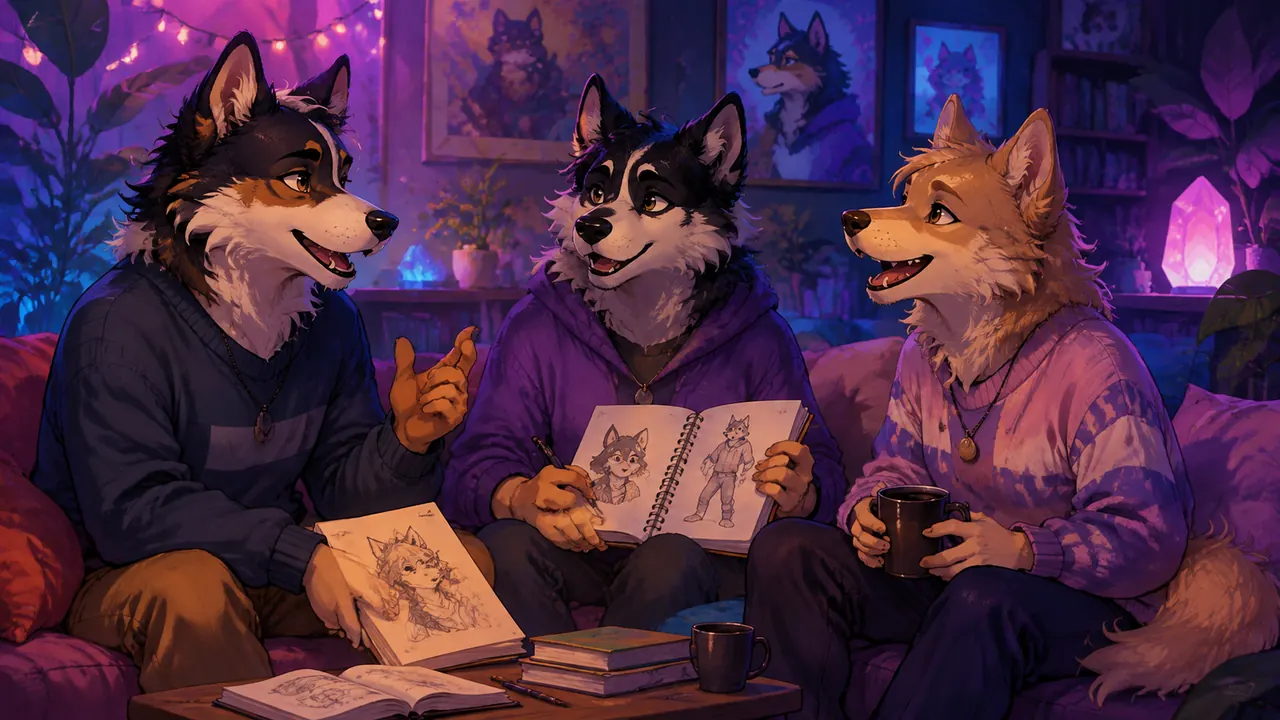
Converted the sourced furry pup guide draft into the native Mello Zone MDX format with current internal paths, image provenance, and an editorial review record. Replaced the hero with an article-specific, credited AI-generated conceptual illustration; reporting and source-review dates are unchanged.