
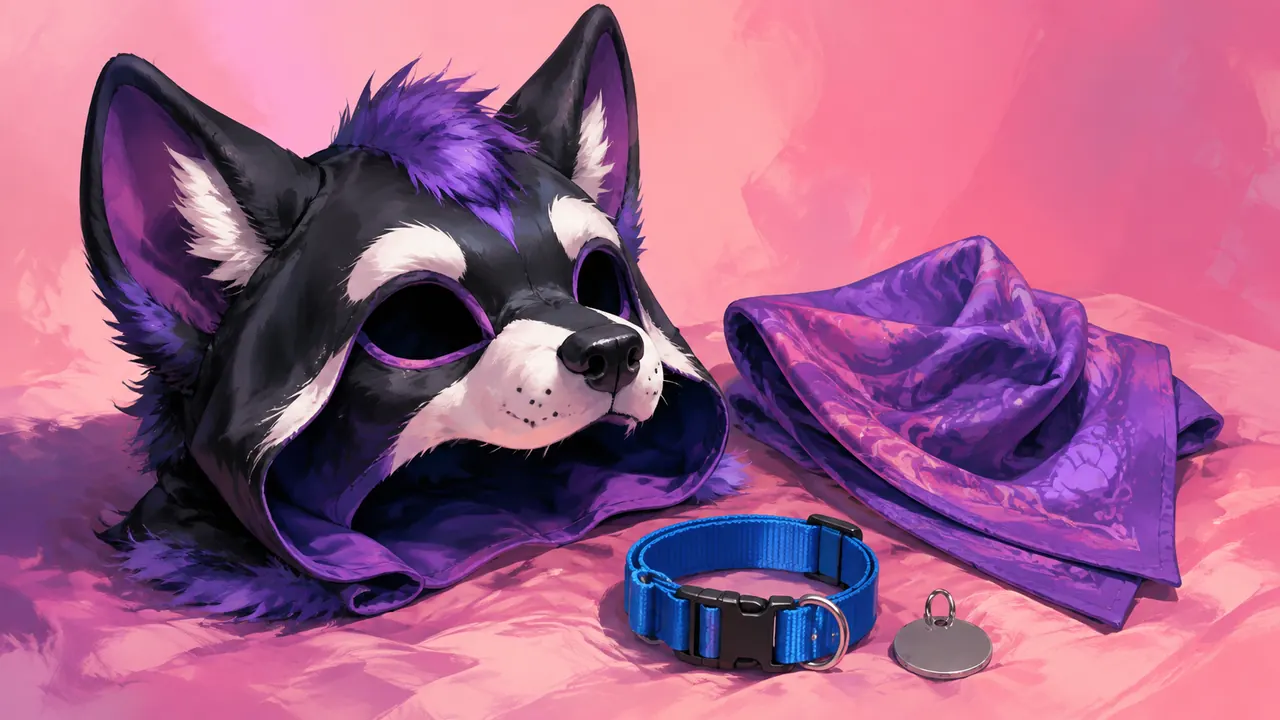
Editorial scope: This is an educational 18+ SFW article. It acknowledges adult subcultures without providing explicit instruction or treating visible identity as consent.
Pup gear can be expressive, practical, handcrafted, symbolic, playful, or deeply personal. A hood may help someone enter a pup headspace. A bandana may match a fursona. A collar tag may carry a chosen name. A harness may be fashion. None of these objects gives strangers permission to assign a role, touch the wearer, or publish their image.
This guide covers pup hoods, collars, bandanas, tags, harnesses, paws, tails, and digital avatar accessories from an adult, non-explicit, SFW community perspective.
What counts as pup gear?
The phrase can include almost any animal-inspired accessory used in human pup culture or furry pup expression:
-
pup hoods or masks;
-
collars, tags, chains, and decorative locks;
-
bandanas, scarves, badges, and pride accessories;
-
harnesses, vests, chest straps, and costume pieces;
-
paws, mitts, gloves, knee pads, and footwear;
-
tails, ears, fursuit parts, and character props;
-
leashes or leads used only within negotiated rules and venue policy;
-
digital avatar ears, tails, collars, tags, particles, gestures, sounds, and OSC controls.
The list overlaps with furry costuming, cosplay, leather fashion, clubwear, performance, and VR avatars. The object alone cannot tell you which culture or meaning applies.
What is a pup hood?
A pup hood is a head covering designed with canine features such as a muzzle shape, ears, markings, or contrasting panels. Common materials include neoprene, leather, rubber, vinyl, fabric, and mixed construction. Designs range from highly stylized cartoon dogs to minimal geometric forms.
Unlike a full fursuit head, a pup hood often follows the wearer’s face more closely and may leave the mouth, chin, or parts of the face visible. That comparison is only visual. Pup hoods and fursuit heads come from different communities and are used for different personal reasons.
A hood is optional. It is not a membership badge, proof of experience, or requirement for a valid pup identity.
Fit matters more than the perfect photo
A hood should not obstruct breathing, create dangerous pressure, or make it difficult to communicate distress. Before wearing one for an event, test it for short periods in a calm environment.
-
Check whether the face opening stays clear when you move.
-
Confirm that straps do not press painfully on the jaw, throat, ears, or eyes.
-
Notice whether hearing and peripheral vision are reduced.
-
Practice removing the hood without assistance.
-
Keep water and a safe break space available.
-
Stop if you feel faint, confused, overheated, numb, or unable to breathe comfortably.
The CDC notes that heat-related illness can become serious when the body cannot cool properly. Enclosed costume pieces, energetic movement, crowded rooms, and warm weather can stack together. Take breaks before discomfort becomes a crisis.
Skin sensitivity and material care
Skin can react to adhesives, dyes, rubber accelerators, metals, fragrances, cleaning products, sweat, and trapped moisture. The American Academy of Dermatology describes contact dermatitis as a reaction triggered by substances touching the skin.
Follow the maker’s cleaning and storage instructions. Test unfamiliar cleaners on a hidden area. Let gear dry completely before storage. Do not share close-fitting gear without considering hygiene and material compatibility. If a rash, swelling, blistering, or persistent irritation appears, stop using the item and seek appropriate medical advice.
Never use a harsh solvent simply because it removes odor quickly. A cleaner that damages the material may also create residue close to the face.
Collars and tags
Collars can be costume accessories, fashion, character design, relationship symbols, comfort objects, identity markers, or practical places to display a pup name. Meanings differ by person.
Do not assume that a collar means someone is “owned,” submissive, partnered, available, or open to handler language. Ask before using relationship titles. A decorative lock may be purely aesthetic. A tag may contain a screen name rather than a legal name.
For public events, avoid putting a home address, phone number, workplace, or other identifying information on a visible tag. The FTC recommends limiting personal information that scammers or account thieves could use.
Bandanas, colors, and community symbolism
Bandanas are popular because they are affordable, easy to coordinate, and less enclosing than a hood. They may represent a fursona palette, pride identity, pack affiliation, event theme, memorial, creator brand, or simply a favorite color.
Color meanings are not universal. A code used by one local group may be unknown or mean something different elsewhere. Do not interrogate a wearer or announce an interpretation. Compliment the design, then let the person decide whether to explain it.
Harnesses, paws, knee pads, and tails
Harnesses can be fashion or structured gear. Fit should allow comfortable breathing and movement. Hardware should not pinch skin or damage nearby costumes. If a venue uses metal detectors, bag checks, or restrictions on chains and straps, review the policy before arrival.
Paws and mitts can protect hands or complete a character silhouette, but they may reduce grip and dexterity. Knee pads can help during floor-level movement, though they do not make every surface safe. Check for sharp debris, wet floors, unstable props, and crowded traffic.
Tails can extend farther than the wearer realizes. In tight spaces, keep awareness of drinks, equipment, wheelchairs, mobility devices, children at mixed-age public events, and other attendees’ costumes. An expressive tail should not become a tiny wrecking ball.
Leashes and leads require explicit agreement
A leash can create safety risks in crowds, around stairs, near doors, and across walking paths. Some venues prohibit them. When allowed, use them only with informed agreement, an easy release, and a clear understanding of who is participating.
Never clip a lead to a stranger, grab someone’s leash, or pull a person without permission. Do not create a trip line across public space. Relationship symbolism does not override venue rules or physical safety.
Gear does not create consent
RAINN’s consent guidance emphasizes that permission should be clear and voluntary. In gear-centered spaces, that principle applies to:
-
touching ears, muzzle pieces, tags, collars, tails, or harnesses;
-
asking someone to pose, bark, kneel, fetch, or perform;
-
using handler, owner, good pup, or similar language;
-
taking photos, recording video, or capturing voice;
-
borrowing, trying on, or adjusting gear;
-
posting a close-up that reveals a face, badge, display name, or location.
Ask a specific question. “Can I take a photo of your hood from the front?” is better than waving a phone. Accept no without commentary.
Photography and social-media etiquette
Before publishing, review what the image reveals. A reflective surface may show an unmasked face. A badge may expose a legal name. A hotel sign, transit stop, or event schedule may reveal location. A bystander may not have agreed to appear.
Show the wearer the frame when practical. Ask whether to tag their account. Credit the hood, fursuit, artwork, or gear maker when the wearer provides that information. Do not remove watermarks or imply that you created commissioned work.
The creator attribution guide explains why credit does not replace permission. The featured creators page demonstrates permission-based presentation.
SFW gear at an adult community event
An 18+ SFW event may allow non-explicit pup gear while setting limits on suggestive presentation, explicit accessories, role-play, or conduct. Read the actual event listing instead of assuming every adult event uses the same standard.
Mello Zone’s 18+ SFW guide separates age from content. The community manifesto requires consent and prohibits unwanted sexualization. Current formats and expectations appear on the community events page.
If a host asks for a gear adjustment, the explanation should focus on the published content rule, venue safety, or accessibility, not shame the person’s body or identity.
Buying or commissioning gear
Before placing an order:
-
verify the maker’s official account and portfolio;
-
read measurement instructions and material disclosures;
-
ask about ventilation, lining, closures, cleaning, repair, and warranty;
-
confirm turnaround time, payment stages, shipping, taxes, and customs;
-
understand whether the design is exclusive or may be reproduced;
-
keep invoices and written approvals;
-
avoid sending identity documents unless a legitimate payment provider requires them through its own secure process.
Do not pressure a creator to copy another maker’s signature design. Inspiration should become a new design, not a counterfeit with the logo sanded off.
Digital pup gear in VRChat
Digital collars, tags, ears, tails, hoods, gestures, sounds, contact receivers, and OSC features can express a pup character without physical gear. They can also create performance, privacy, and consent issues.
Keep public toggles within the world and event rating. Avoid ear-splitting audio, full-screen effects, unwanted contact triggers, or interactions that activate when another avatar approaches. Provide a simple way to disable features. Do not clone or extract an avatar merely because it is visible.
Use the Safety Center if digital interaction becomes harassment, and explore technical or creator resources through the resource library.
Cleaning and storage checklist
-
Follow the maker’s instructions for the exact material.
-
Wipe sweat and residue after use with an approved method.
-
Dry fully in a ventilated area away from damaging heat or direct sun.
-
Store the shape without crushing ears, muzzle structures, or hardware.
-
Keep separate bags or liners for clean and worn gear during travel.
-
Inspect seams, straps, snaps, buckles, and eye openings before the next event.
-
Retire or repair gear that creates sharp edges, tearing, breathing restriction, or unstable hardware.
Practical questions about pup gear
Do pup hood colors have universal meanings?
No. Meaning varies by wearer, maker, pack, event, and local culture.
Can I wear a pup hood in a furry space?
That depends on the event’s age and content rules. Ask the organizer when the policy is unclear.
Can I touch someone’s hood to compliment it?
Compliment with words first. Ask before touching any gear.
Is expensive gear better?
Price may reflect materials, labor, customization, or brand, but cost does not determine identity or belonging.
Where can I learn about the broader communities?
Read FurScience’s furry overview and the pup play community survey. For boundaries and health context, consult RAINN, the FTC, the CDC heat guidance, and the AAD contact dermatitis overview.
Traveling with pup gear
Travel adds heat, pressure, moisture, security checks, and loss risk. Pack gear so structural pieces are not crushed and metal hardware cannot scrape painted, rubber, leather, or fabric surfaces. A breathable storage bag is often better for recently worn gear than sealing moisture inside plastic.
Carry a small care kit with a maker-approved wipe, clean cloth, spare fastener, water, and a separate bag for damp items. Keep commissioned or irreplaceable pieces with you when practical rather than placing them in unattended checked baggage. Photograph the condition before travel and keep the maker’s contact information or receipt in a private record.
At hotels and conventions, do not leave identifying tags, badges, or gear visible in public hallways. Ask before using shared changing spaces. Respect venue rules about masks, security screening, chains, props, and face coverings. A private event’s gear policy does not override transportation or building requirements.
Accessibility and sensory considerations
Gear can change vision, hearing, temperature, balance, speech clarity, and the ability to read a room. A wearer may need slower movement, wider pathways, a sighted guide, text communication, or a quiet recovery space. Do not interpret reduced speech or unusual movement as permission to take control.
Hosts can improve access by publishing lighting and temperature notes, keeping pathways clear, offering seating, allowing non-gear participation, and avoiding activities that require kneeling or rapid movement. A person who removes a hood or collar for comfort has not become less authentic.
Repair, resale, and retirement
Inspect stitching, adhesives, buckles, eye openings, lining, snaps, and structural supports after events. Small failures can become safety problems when a strap tears in a crowd or a rigid edge shifts near the eye. Ask the original maker before using a product that could permanently alter an unfamiliar material.
When reselling gear, describe condition honestly, disclose repairs and material exposure, clean it according to maker instructions, and remove private tags or identifying information. Confirm whether a commissioned design can be transferred or reproduced. Some makers retain rights to patterns, logos, or character-specific artwork even when the physical object changes hands.
Retire an item when damage interferes with breathing, visibility, safe closure, hygiene, or structural stability. Sentimental gear can become a display piece rather than being forced through one more event.
Building a small SFW gear kit
A beginner does not need a full coordinated set. Start with one or two items that are comfortable, easy to maintain, and appropriate for the places you actually attend.
-
A washable bandana or badge can establish color and character.
-
A tag can display a community name without exposing legal information.
-
Knee protection may be more useful than decorative hardware for floor-level activities.
-
A water bottle and break plan matter more than a second photo accessory.
-
A digital avatar toggle can test an aesthetic before a physical commission.
Build around use, not pressure. The most convincing character design usually comes from repeated choices rather than purchasing every symbol at once.
Respecting maker boundaries
Gear makers are artists, pattern designers, fabricators, and small-business operators. Do not trace product photos for commercial designs, remove maker marks, demand another artist duplicate a signature style, or publish private work-in-progress messages without permission.
When posting, credit the maker using the name and link they prefer. If a repair or modification changes the piece substantially, describe both contributions rather than implying that the second person created the original. Creator respect keeps the craft ecosystem alive long after the event photos stop circulating.
Let communication give the gear its meaning
Pup gear works best when it supports expression without replacing communication. Wear what fits your identity and the event. Protect your breathing, skin, privacy, and mobility. Respect makers. Ask before touch or photography. Let the wearer explain the meaning, because the most important label is not stitched into the neoprene.
Find adult SFW community pathways through the Mello Zone community.
Why this article exists
The Mello Zone contribution: Mello Zone explains pup hoods, collars, bandanas, and related gear through adult SFW community use, separating identity, expression, consent, photography, privacy, comfort, hygiene, and scene-specific assumptions.
by Mello Zone Editorial Team.
Converted the sourced pup culture guide draft into the native Mello Zone MDX format with current internal paths, image provenance, and an editorial review record. Replaced the hero with an article-specific, credited AI-generated conceptual illustration; reporting and source-review dates are unchanged.
Read our sourcing, AI-assistance, and corrections policy.