Editorial scope: This is an educational 18+ SFW article. It acknowledges adult subcultures without providing explicit instruction or treating visible identity as consent.
Furry pup, pup play, and pet play are related only in the broadest sense: all can involve animal-inspired expression. Their histories, communities, purposes, and expectations are different. Some adults move comfortably between them, while others identify strongly with only one.
The cleanest comparison is this: a furry pup is usually rooted in the furry fandom and anthropomorphic character culture; pup play is an adult role-play and social subculture centered on canine behavior or identity; pet play is the wider adult umbrella that includes pups and other animal roles. Clothing or gear may hint at context, but it never tells the whole story.
Comparison at a glance
| Term | Center of gravity | Common expression | What not to assume |
|---|---|---|---|
| Furry pup | Furry fandom and canine character culture | Fursona, art, avatar, fursuit, role-play, memes, social identity | Do not assume kink participation or sexual interest |
| Human pup / pup play | Adult pup, leather, BDSM, or social role-play communities | Pup name, mannerisms, pack life, hood, collar, handler dynamic, events | Do not assume every pup is sexual, submissive, partnered, or furry |
| Pet play | Broader adult animal-role-play umbrella | Pup, kitten, pony, fox, bunny, and other negotiated roles | Do not assume one role, one hierarchy, or one set of gear |
What is a furry pup?
A furry pup is an informal fandom term rather than a fixed academic category. It may mean that someone’s fursona is a dog or puppy. It may describe a cheerful, affectionate, excitable, or canine-coded social persona. It can also signal that the person enjoys pup aesthetics while participating primarily in furry art, gaming, conventions, streaming, or VRChat.
The furry fandom is built around anthropomorphic animals: animal characters with human language, clothing, stories, relationships, occupations, or personalities. FurScience notes that fursonas are a widespread part of furry participation, but no single species or level of involvement is required. Someone can be a furry without a fursuit, and someone can have a canine avatar without calling themselves a pup.
A furry pup’s visual vocabulary might include floppy ears, paw gloves, tags, collars, oversized hoodies, chew-toy motifs, expressive tails, or a cartoon canine face. The meaning is set by the character creator, not by a universal subculture code.
What is pup play?
Pup play is an adult form of role-play in which a person may adopt canine behaviors, a pup identity, or a negotiated relationship with other pups or a handler. Academic literature places it within contemporary adult sexual and social subcultures, while also documenting community, playfulness, identity, stress relief, and belonging as meaningful parts of participation.
The words pup, handler, trainer, pack, and headspace can be important within that culture, but they are not standardized job titles. One pack may be a casual friend group. Another may have negotiated roles. Some participants prefer solo expression and do not want a handler at all.
Pup play can be sexual for some adults and nonsexual for others, or it can change by setting. That is why context and consent matter more than labels. An educational conversation at an SFW gathering does not become an invitation to private play.
What is pet play?
Pet play is a broader adult role-play category. Pup play fits under it, alongside kitten play, pony play, fox play, bunny play, and other animal-inspired roles. The experience may involve movement, sound, sensory focus, care, costume, training games, identity, or negotiated power exchange.
The umbrella is useful for describing shared themes, but it can also flatten important differences. A pony player’s equipment, history, movement, and community norms may differ greatly from those of a pup. A kitten may reject pack language entirely. The respectful approach is to learn the person’s terms rather than treating pet play as one costume party with a single script.
Fursona vs. pupsona
A fursona is an anthropomorphic character associated with a person’s creative or social identity in the furry fandom. A pupsona may mean a canine fursona, or it may describe the colors, name, temperament, gear, and identity someone uses in human pup culture.
Both can be fictional, aspirational, symbolic, or closely connected to the person’s everyday self. Both can change. Neither automatically replaces a legal identity or claims that the person is biologically an animal.
Because pupsona has more than one use, profiles benefit from a sentence of context: “Rex is my canine fursona,” “Mika is my SFW pup character,” or “Blue is my adult pup name.” Clarity removes the need for strangers to guess.
What about therians and otherkin?
Therian and otherkin identities are distinct from both furry fandom and pup play. In general community usage, a therian experiences a personal identity connected to a nonhuman animal, while otherkin is a broader term that may include mythological or non-animal identities. Those descriptions vary by person and community.
Furry identity is usually participation in a fandom. Pup play is an adult role-play and social subculture. Therian and otherkin labels concern identity frameworks. A person may use more than one label, but overlap should never be assumed. The easiest respectful question is: “What does that term mean for you?”
Does gear reveal which community someone belongs to?
Not reliably. Fursuit parts, pup hoods, collars, harnesses, bandanas, tails, tags, masks, and paws can appear across art, fashion, pride events, cosplay, furry conventions, leather events, clubs, photography, and social VR. Materials also overlap. Neoprene does not carry a magical metadata file.
Some gear has established meaning within a particular group or relationship, but those meanings are local and personal. Color codes are especially easy to misread. Never treat a collar as proof that someone is owned, available, submissive, or open to touch.
Ask before photographing gear, touching it, trying it on, borrowing it, or using its design in art. Commissioned pieces may contain a creator’s protected design and a wearer’s personal symbolism. Mello Zone’s creator attribution guide explains why credit and permission are separate obligations.
How consent changes the comparison
Consent is not a feature unique to kink spaces. It also governs fandom photography, avatar interaction, direct messages, role-play, art use, streaming, and event participation. RAINN’s consent guidance emphasizes clarity, voluntariness, and the absence of pressure. In practical community language, ask, listen, accept the answer, and check again when the activity changes.
Examples:
-
Permission to take a group photo is not permission to publish a close-up with someone’s display name.
-
Permission to call someone “pup” in one event is not permission to use the term everywhere.
-
Permission to hug an avatar is not permission to grab a real-world costume or gear.
-
Permission to discuss pup culture is not permission to send explicit links.
-
A pack title does not create authority outside the relationship that negotiated it.
How an 18+ SFW community handles the overlap
An adult SFW community can welcome furry pups, human pups, leather-community members, therians, otherkin, creators, gamers, and curious newcomers without turning every shared surface into a debate about private identity. The rules need a clear public content boundary.
Mello Zone’s 18+ SFW guide separates adult eligibility from explicit content. The community manifesto protects harmless difference while prohibiting harassment, exploitation, doxxing, and unwanted sexualization. The Safety Center provides a route for concerns that cannot be solved by simply leaving a conversation.
This model allows someone to say, “I’m a pup,” without being interrogated. It also allows another person to say, “I only mean my canine fursona,” and have that boundary accepted immediately.
Which spaces fit which purpose?
Furry art websites, VRChat groups, Discord communities, conventions, leather organizations, local social groups, and private friend circles each operate differently. Before joining, look at the destination’s stated audience, age rule, content rating, moderation model, privacy practices, and event expectations.
The community platform guide helps compare public furry destinations. The Mello Zone community explains its adult SFW lane, and the resource library offers lower-pressure reading before participation.
How to describe yourself clearly
You do not owe strangers an autobiography. A one-line profile can prevent confusion:
-
“Canine furry, SFW interaction only.”
-
“Human pup and furry artist; ask before DMs.”
-
“Pup-coded VRChat avatar, not part of pup play.”
-
“Adult pup; public profile is SFW.”
-
“Therian and furry; please do not use pup labels for me.”
Clarity is not a contract. You can revise your language as you learn more about yourself.
Common myths
“All furries are into pup play.”
False. Furry fandom includes an enormous range of interests, species, art styles, events, games, and social experiences.
“All human pups are submissive.”
False. Roles and preferences vary. Some pups are dominant, switch, independent, social, playful, or uninterested in hierarchy.
“A hood is the pup version of a fursuit head.”
That comparison can help explain the silhouette, but it erases different histories and meanings. Treat each object in its own context.
“Pet play is always sexual.”
It is an adult subculture and can be sexual, but research and community accounts also describe social, identity, and playful participation. The setting still determines what belongs.
“Therians are just very serious furries.”
That is dismissive. The labels describe different experiences, even when one person uses both.
Research and further reading
For furry fandom basics, read FurScience’s overview and its page on fursona species. For adult pup culture, consult the community survey, the phenomenological study, and research on pup identity narratives. For interaction boundaries, use RAINN’s Consent 101.
Scenario-based examples
A canine avatar at a public world
Jordan uses a floppy-eared dog avatar in VRChat and calls it their puppy character. They attend furry meetups, draw character badges, and do not participate in human pup play. “Furry pup” describes the avatar and social style. It would be inaccurate to infer a kink identity from the character.
A human pup who is not a furry
Marco uses a pup name and hood at adult leather events but has no fursona, fursuit interest, or connection to furry fandom. “Human pup” fits his community participation. Calling him a furry because he wears animal-inspired gear would overwrite his own description.
A person active in both communities
Rin has a canine fursona, builds VRChat avatars, and also participates in adult pup culture. The identities overlap for Rin, but the boundaries change by space. Their public creator profile is SFW, while private adult participation stays in separately governed spaces. One label does not automatically import every context into every room.
A broader pet-play identity
Avery participates as a kitten and uses pet-play language, not pup language. They enjoy furry art but do not call themselves a furry. Pet play is the broader adult category; “pup” would be the wrong role.
A therian who enjoys furry art
Lee describes a personal animal identity through therian language and also commissions anthropomorphic art. The furry activity and therian identity coexist, but one is not a substitute explanation for the other. Respectful conversation keeps both terms available.
Why precise language improves safety
Loose labels can create real social pressure. When someone hears “pup” and assumes submission, availability, or a handler relationship, the misunderstanding can become unwanted flirting, touching, role assignment, or private messages. Precision interrupts that chain before it reaches the person.
Clear language also helps moderators apply the correct rule. A canine avatar is an appearance choice. Explicit solicitation is conduct. A pup hood is an object. Harassment is behavior. Moderation works better when staff describe what happened rather than treating identity symbols as evidence of intent.
Choosing a label without locking yourself in
You can use a label provisionally. “I am exploring a canine fursona,” “pup-coded, SFW only,” or “curious about adult pup culture” communicates where you are without claiming certainty. You may also participate without a label.
Try writing three short sentences:
-
What part of animal-inspired expression interests me?
-
Which communities or activities do I actually participate in?
-
What should other people not assume from my profile?
The answers often produce a clearer introduction than a stack of terms copied from someone else’s glossary.
How platforms blur the boundaries
Social platforms place unrelated communities beside each other through hashtags, recommendations, shared creators, and visual similarity. A search for canine avatars may surface fursuits, pup hoods, therian masks, pet-play education, dog training, costume design, and ordinary pet videos in one scroll. The algorithm groups images by resemblance, not by cultural accuracy.
That makes source context important. Read the creator’s caption and profile. Check whether the post is educational, artistic, commercial, personal, or event-specific. Do not copy a term from one community and apply it to everyone wearing a vaguely similar object.
A respectful one-sentence explanation
When a friend asks for the difference, try: “Furry pups are usually part of anthropomorphic character fandom, pup play is an adult canine role-play and identity subculture, and pet play is the broader adult umbrella; some people overlap, but you should ask rather than assume.”
That sentence is not the entire history, but it keeps the doors labeled correctly.
Keep neighboring identities distinct
The labels are neighboring signposts, not identical destinations. Furry pups begin in character and fandom culture. Pup play begins in an adult role-play and social subculture. Pet play is the wider umbrella. Therians and otherkin use separate identity frameworks. Individuals may combine these in ways that are deeply personal.
Good community practice leaves room for complexity while keeping the public rules simple: no assumptions, no unwanted sexualization, no touch or recording without permission, and no pressure to explain more than someone wishes to share. Discover community voices through featured creators and keep learning without turning people into glossary entries.
Why this article exists
The Mello Zone contribution: Mello Zone uses adult SFW pup-community experience to distinguish furry pup identity, human pup play, pet play, social expression, consent, gear, and community context without collapsing them into one sexualized definition.
by Mello Zone Editorial Team.
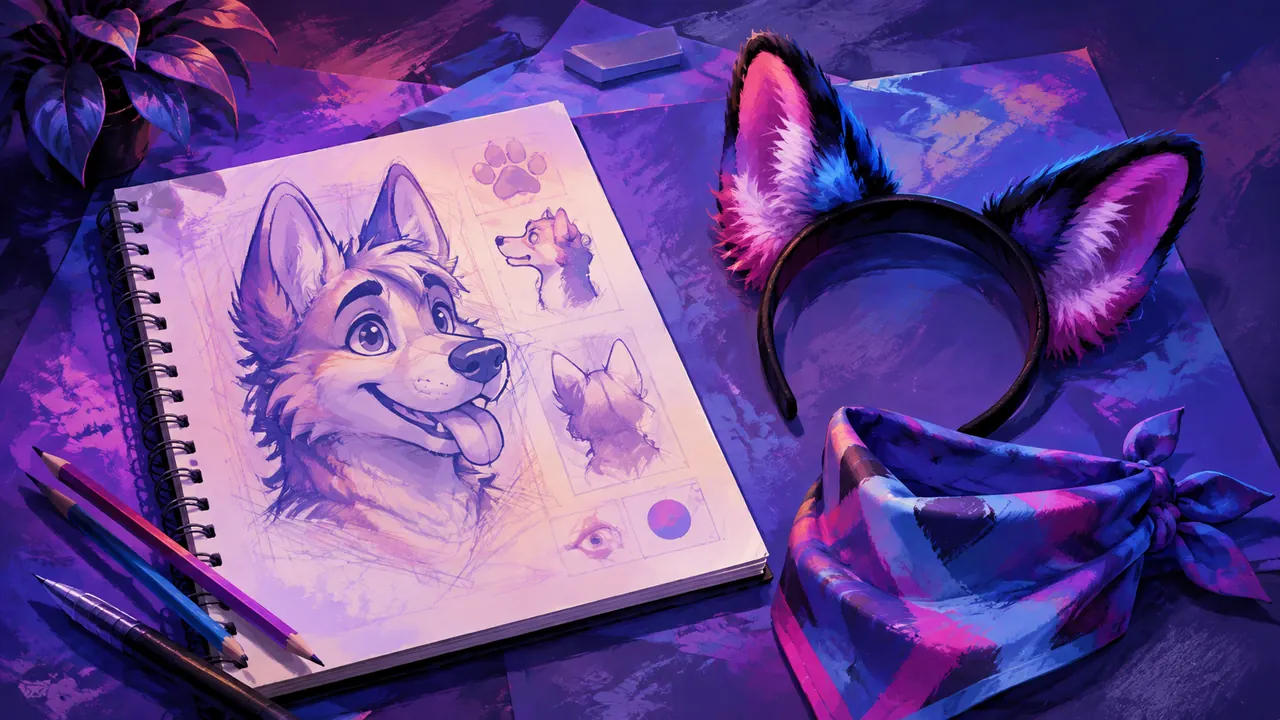
Converted the sourced community explainer draft into the native Mello Zone MDX format with current internal paths, image provenance, and an editorial review record. Replaced the hero with an article-specific, credited AI-generated conceptual illustration; reporting and source-review dates are unchanged.
Read our sourcing, AI-assistance, and corrections policy.