
Editorial position This is a sourced opinion article. It distinguishes verified convention information from Mello Zone’s interpretation and does not treat identity, gear, or rumor as proof of misconduct.
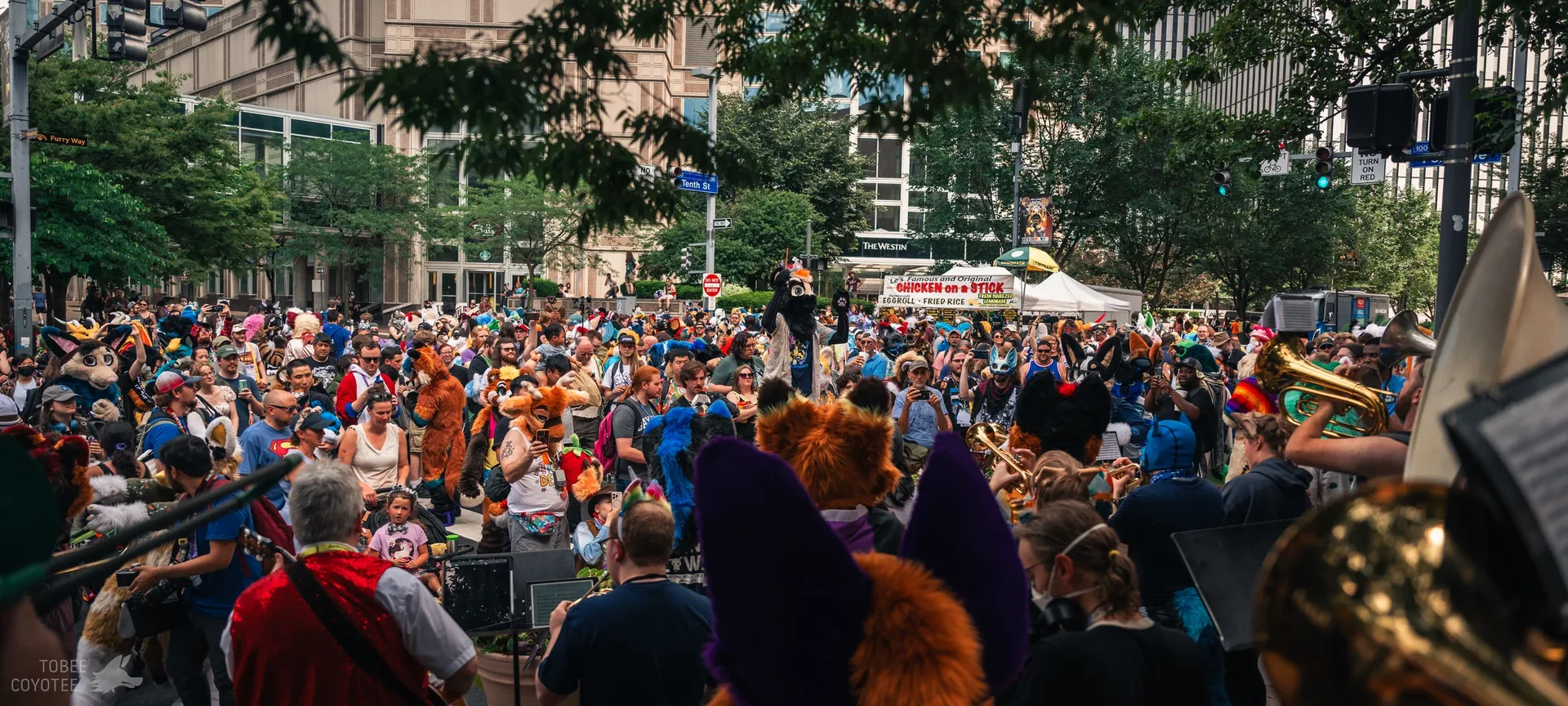
Our take: Anthrocon made the correct decision when it cancelled the 2026 Fursuit Parade and Block Party because of heat and extreme weather in the Pittsburgh forecast. A beloved tradition is not worth gambling with people who are wearing insulated costumes, walking in crowds, managing limited vision, and often performing through discomfort.
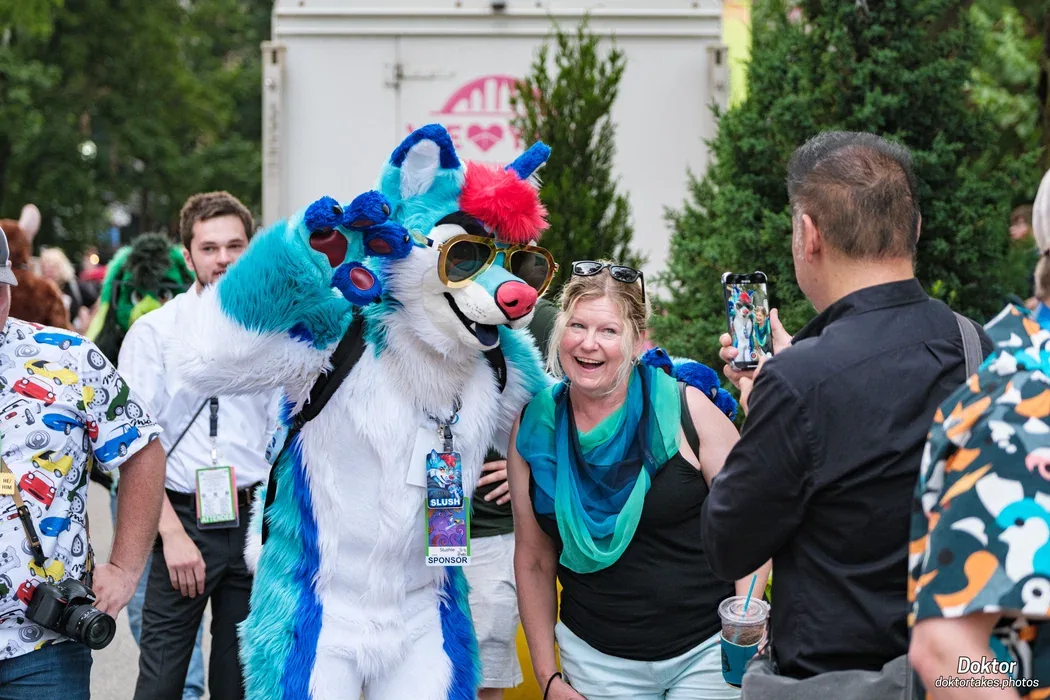
Convention community photograph by Doktor on Furtrack. All rights reserved; supplied by the site owner for credited editorial use.
But “the cancellation was responsible” should not be the end of the conversation. The harder conclusion is that major furry conventions need heat plans designed months in advance, with published thresholds, indoor alternatives, accessible cooling, and communication that does not depend on a last-minute social post.
The cancellation was not anti-furry
Anthrocon’s official parade page says the July 4 parade and block party were cancelled on July 3 because of the heat and extreme weather situation in the forecast. That is not evidence that the convention stopped caring about its signature public event. It is evidence that organizers recognized a changing risk.
Furry culture has a strange habit of treating endurance as authenticity. People joke about sweating inside a carpet, refusing to break character, or surviving a long parade route because the photos will be worth it. Those jokes can quietly become expectations. A cancellation interrupts the performance before someone feels pressured to prove devotion with their body.
The parade was also planned as a public event connecting the convention with Pittsburgh. That makes safety more complicated, not less. Organizers must consider fursuiters, children, handlers, mobility devices, volunteers, police, city workers, photographers, spectators, blocked streets, hydration, and the ability to evacuate or shelter from severe weather.
Heat does not need to look dramatic to become dangerous
The CDC’s heat guidance warns that hot conditions can affect anyone and may worsen existing health conditions. Fursuiting adds several layers: insulation, physical exertion, reduced ventilation, limited peripheral vision, communication barriers, and the social pressure to keep moving.
A person does not need to collapse spectacularly for a plan to have failed. Early symptoms can be missed or mistaken for ordinary convention exhaustion. A performer may become dizzy inside a head, lose coordination on a curb, or struggle to communicate through a costume. A handler may be watching traffic and miss the change. A crowded outdoor event can make a simple exit surprisingly difficult.
That is why “everyone should hydrate” cannot carry the entire safety plan. Hydration is necessary, but it does not neutralize temperature, humidity, radiant heat, costume design, medications, disability, travel fatigue, or hours spent lining up before the event begins.
Anthrocon had safety measures, and cancellation was still necessary
The parade plan included indoor lineup, a route ending with cooling and hydration, temporary headless zones for the outdoor party, staff support, and rules encouraging hydration. Those are sensible measures. The decision to cancel shows an important truth: mitigation has limits.
When the forecast crosses a dangerous threshold, more water stations do not magically transform an outdoor fursuit parade into a safe event. Cooling tents do not protect everyone walking between them. A headless zone helps only after a person recognizes the need, reaches it, and can remove equipment.
Responsible planning includes the courage to admit that the event should not happen in its planned form.
The strongest argument against cancellation
The strongest criticism is not that Anthrocon should have marched anyway. It is that a convention of this scale should not be left with a binary choice between the full outdoor spectacle and cancellation on the eve of the event.
Attendees travel long distances, spend money on suits, arrange handlers, practice routines, and build their weekend around the parade. Pittsburgh residents and businesses prepare for public traffic. Volunteers commit time. A cancellation can therefore feel like a preventable loss even when it is medically responsible.
That frustration should be aimed at contingency design, not at the person monitoring the forecast. The question is whether an indoor alternative, shortened showcase, timed photo circuit, livestream, or distributed set of smaller events could have been activated immediately.
The strongest argument for cancellation
The strongest defense is brutally simple: weather does not negotiate with sunk costs. Once conditions are unsafe, the emotional value of tradition cannot reduce physiological risk.
The National Weather Service HeatRisk tools are designed to help planners understand upcoming heat and associated risk. The correct time to use that information is before a crowd has assembled, not after symptoms appear.
Organizers also have to protect volunteers. Safety staff and handlers are often expected to work outdoors longer than individual participants. They may wear radios, uniforms, or partial costumes, and they cannot simply leave when they become uncomfortable. An event that is optional for attendees may function like a shift for volunteers.
A real heat plan needs published thresholds
“Weather permitting” is not a plan. It is a disclaimer. A serious policy should explain which measurements are considered, who makes the decision, and what changes at each threshold.
A convention could publish a ladder:
-
Green: normal route with standard water and cooling.
-
Yellow: shorter route, reduced staging time, more cooling, frequent announcements.
-
Orange: timed waves, optional partial-suit participation, indoor finish, stronger medical coverage.
-
Red: outdoor event cancelled and indoor alternative activated.
-
Severe weather: immediate shelter plan regardless of heat level.
The exact thresholds should be set with qualified local partners. The value of publication is not pretending every risk can be automated. It is removing the impression that decisions are improvised or political.
Lineup time counts as exposure
Parade plans often focus on the route, but participants may spend longer dressing, traveling to lineup, waiting for approval, staging, and exiting than they spend visibly marching. Heat planning must cover the whole experience.
Indoor lineup is helpful only if the room remains cool at capacity. Elevators and skybridges can become chokepoints. Outdoor walks from hotels can add exposure before the official clock starts. A participant may already be overheated when the parade begins.
NIOSH guidance on preventing heat illness emphasizes hydration, acclimatization, and work-rest schedules. The prevention framework comes from occupational safety, but the principles apply to volunteer-heavy events where people perform physical tasks in heat.
Handlers should be treated as safety partners
A good handler is not a decorative sidekick. They monitor movement, obstacles, communication, costume problems, and changes in behavior. Policies should define when handlers may enter lineup, accompany a participant, or intervene.
Anthrocon’s parade rules limited handlers on the route except for mobility needs and young children. That may help crowd flow, but it also means the convention’s own staffing must be sufficient to notice distress. A heat plan should state the staff-to-participant model and how fursuiters who rely on a handler can participate without being excluded.
The Anthrocon accessibility page describes priority and accommodation systems across the convention. Weather contingencies should be integrated into that same accessibility architecture rather than treated as a separate medical footnote.
Indoor alternatives should still feel like an event
An emergency replacement should not be “go hang out in the hallway.” If organizers want attendees to accept weather decisions without resentment, the alternate program must preserve some of what made the parade meaningful: visibility, performance, photography, shared ritual, and public celebration.
Possible alternatives include:
-
A climate-controlled loop through connected convention spaces with capacity waves.
-
A staged fursuit showcase where each participant crosses a lit platform.
-
Scheduled species or color-group photos in large indoor rooms.
-
A livestreamed “parade from the den” with short character introductions.
-
Multiple smaller indoor routes to reduce density.
-
A rescheduled outdoor photo opportunity during a safer window, if conditions allow.
None perfectly replaces the street parade. That is not the goal. The goal is to convert disappointment into a different community memory instead of a blank square on the schedule.
Do not punish people for opting out early
A participant should be able to skip or leave a weather-sensitive event without losing a coveted sticker, future eligibility, social status, or access to an indoor alternative. People know their own medications, disabilities, tolerance, and costume better than a cheering crowd does.
The pup hoods and gear etiquette guide emphasizes that removing gear for comfort does not make someone less authentic. The same applies to fursuits. A character is not betrayed when the performer chooses air.
Costume requirements should bend with weather
Anthrocon’s planned parade rules set minimum costume requirements for participants. Those rules were meant to preserve the visual identity of a public furry parade. In high heat, however, organizers should consider whether partial-suit options, cooling garments, uncovered skin, shorter wear periods, or non-suit character displays can be allowed without turning safety into a costume-quality contest.
The Standards of Conduct already regulate public attire and behavior. A weather exception can remain visually coherent while giving people safer ways to represent characters.
Tradition should serve the community. The community should not be sealed inside tradition with a zipper.
Communication needs a clock
Conventions should tell attendees when they will decide. For example: preliminary status seventy-two hours out, updated status twenty-four hours out, final outdoor decision by a defined morning deadline, and immediate alerts for severe weather.
Updates should appear in the app, website, social channels, hotel signage, registration, and volunteer communications. Accessibility requires text, not only stage announcements. International visitors and people already in transit need enough notice to adjust.
The guide to joining furry pup communities safely recommends learning emergency controls before an incident. Event organizers have the mirror obligation: publish the emergency pathway before attendees need it.
The broader convention lesson
Climate and extreme weather are not background scenery. They are programming variables. Outdoor dances, car shows, meetups, pool events, parades, block parties, photo walks, and shuttle systems all need thresholds and alternatives.
Mello Zone’s VRChat furry pup community guide may seem unrelated, but virtual or hybrid spaces can preserve community access when an outdoor event is cancelled. A livestream, VR watch room, or digital parade gallery is not a consolation prize when it is designed intentionally.
Cancellation was correct; preparedness is the next test
Anthrocon was right to cancel. Organizers should be praised for choosing health over spectacle. They should also treat the cancellation as a design review, not a freak interruption.
The Mello Zone Safety Center is built around the idea that prevention, response, and follow-up are separate stages. A convention heat plan needs all three: forecast monitoring and thresholds, trained on-site response, and a post-event review that changes next year’s plan.
The Mello Zone community manifesto rejects the idea that belonging requires self-endangerment. Community care sometimes looks less cinematic than a parade. Sometimes it looks like a closed street, an indoor room, and everyone going home alive.
What future conventions should publish
-
The weather data and decision thresholds used.
-
The final decision time and communication channels.
-
Indoor or shortened alternatives.
-
Cooling, hydration, medical, and staff locations.
-
Handler and accessibility rules during altered conditions.
-
Whether costume requirements change with heat level.
-
Refund or ticket policies for separate weather-dependent events.
-
A post-event summary of what worked and what will change.
Attendees can prepare their own boundaries using the beginner guide to the furry pup community, which treats participation as optional rather than performative.
Hotels and city partners belong inside the heat plan
A convention cannot solve an outdoor heat emergency from a hotel ballroom alone. City permits, street closures, emergency services, hotel cooling capacity, transit, accessibility routes, and public spectators all influence what alternatives are possible. Those relationships should be built before the forecast becomes alarming.
Hotels can identify climate-controlled staging rooms, backup photo spaces, elevator capacity, water access, and routes that do not force suited attendees back outside. City partners can help define shelter triggers and communication channels. Medical and accessibility advisers can review whether an indoor alternative actually works for participants who use handlers, wheelchairs, service animals, or sensory accommodations.
Mello Zone’s Safety Center treats prevention and incident response as connected systems. Convention heat planning needs the same approach: reduce exposure, communicate thresholds, provide immediate help, and record what should change next year.
Cancellation should trigger a public after-action review
Organizers do not owe the internet every private discussion, but a major cancellation deserves more than a disappearing announcement. After the convention, publish what measurements were considered, when the decision was made, which alternatives were evaluated, and what will be built into the following year.
This is not about punishing staff for choosing safety. It is about converting a painful decision into institutional memory. Without a written review, the same debate returns with a different forecast and a new volunteer team. With one, attendees can see that feedback became planning rather than merely reassurance.
A mature community should be able to hold two thoughts at once: Anthrocon protected people by cancelling, and future conventions should be better prepared to preserve the ritual in a safer form.
What Anthrocon should guarantee next time
Was cancellation enough, or should a convention as established as Anthrocon be expected to activate a fully developed indoor substitute whenever its signature outdoor event becomes unsafe?
Share that distinction through the Mello Zone community hub: support the safety call, then demand a stronger plan.
Why this article exists
The Mello Zone contribution: Mello Zone turns one parade cancellation into a furry-event operating framework for fursuiters, handlers, volunteers, accessibility needs, weather thresholds, cooling space, and public contingency decisions.
by Mello Zone Editorial Team.
Converted the sourced convention safety opinion draft into the native Mello Zone MDX format with current internal paths, image provenance, and an editorial review record.