
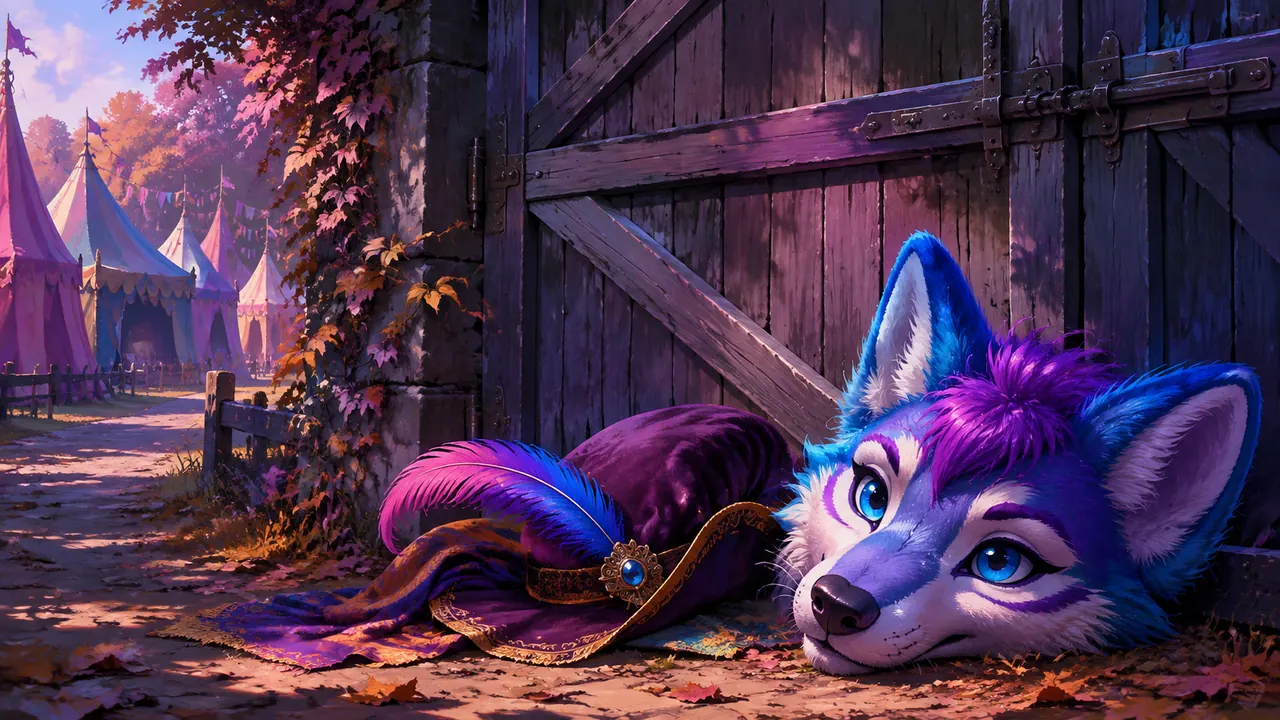
September 12, 2026 source review: The Maryland Renaissance Festival’s current FAQ still explicitly lists fursuits among examples of non-compliant headgear and face coverings, and the festival’s published 2026 season continues into October. That verifies the written costume rule. It still does not independently establish how every gate interaction has been handled, how many complaints occurred, or whether every interviewee’s explanation is complete.
September 7 source review: the festival FAQ still lists fursuits under its headwear restrictions in the actual page HTML. A text-only reader failing to show the accordion is not evidence that the rule was removed. The September 5 weekend discussed as tomorrow in this September 4 report has now passed. This review verifies the written policy, not enforcement at the gate, customer-complaint totals or the accuracy of every quoted person’s account.
A furry-news story hit the national feed this afternoon with a headline built to sprint:
Maryland Renaissance Festival banned furries.
The real rule is narrower, stranger, and more useful to understand.
The Maryland Renaissance Festival’s current 2026 FAQ explicitly lists fursuits among examples of non-compliant headgear and face coverings. The festival says headwear must be removable, thematic to the event, and suitable for a family-friendly venue. It also says patrons may wear costumes, but the fair is not a cosplay or LARP event and patrons are not permitted to perform for other guests.
That is a real fursuit restriction.
It is not, in the written policy, a ban on a person for being furry.
A furry arriving in ordinary clothing is not identified by the rule as prohibited. A furry artist, writer, fan, or suit owner without a fursuit is not named as an excluded class. The gate rule targets a costume category.
That distinction might sound microscopic when the discourse is already boiling.
It is actually the whole story.
Because once the headline is separated from the policy, four different questions appear underneath it:
What does the festival actually ban?
Why does management say it made the change?
Which reported incidents are independently verified?
And is a category-wide fursuit rule a proportionate response to behavior the festival says came from some costumed patrons?
Those questions land at a useful moment. The Maryland Renaissance Festival’s next 2026 weekend begins tomorrow, September 5, and the rule is not hypothetical anymore.
⚡ The Short Pour: What Is Verified
The cleanest fact is sitting on the festival’s own website.
The Maryland Renaissance Festival’s current FAQ has a Headwear Restrictions section. It says headwear must be removable, thematic, and appropriate to a family-friendly venue. Face coverings have to come off at the entrance for gate inspection before compliant coverings can be worn as intended inside.
Then the FAQ gives examples of non-compliant headgear and face coverings.
That list includes fursuits.
The same official page separately explains that patrons are welcome to dress in costume, but the event says it is not a LARP or cosplay event. It reserves performances for paid performers and tells patrons not to entertain other visitors, give out tokens or candy, or establish their own photo-op station for the purpose of drawing attention.
The festival’s homepage reinforces the theme rule: all headwear must be removable at entry and thematic to the event. The 2026 festival opened August 29 and resumes September 5, 6, and 7 before continuing on selected weekends through October 25.
Those are first-party facts.
The motives require attribution.
In a September 2 report, City Cast DC said Maryland Renaissance Festival general manager Julius Smith told the outlet that customer complaints were a major reason for the policy. Smith said some patrons reported discomfort around people wearing fursuits and that others felt the suits detracted from the Renaissance theme.
City Cast also reports Smith saying the festival had dealt with furries giving unauthorized performances and posing as paid cast members.
Those are organizer claims reported from a direct interview.
They are not the same thing as independently documented incident reports.
City Cast says it asked the festival for specific examples of prior furry misconduct and was still waiting for them when its story was published.
That evidence boundary matters.
📰 Today’s Headline Is Newer Than the Rule
The restriction did not materialize this afternoon.
City Cast reports that furry and Renaissance-fair communities noticed the updated dress code in May 2026. The festival’s 50th season then opened August 29.
What changed today is the size of the megaphone.
A fresh USA Today Network report, circulated nationally on September 4, pushed the story into a much broader news cycle just before the fair’s second weekend.
So this is one of those stories where the policy is months old but the public moment is new.
That difference matters for readers trying to understand why their feed suddenly looks like a castle caught fire.
The festival is not announcing a same-day emergency restriction.
The fandom is encountering an existing 2026 restriction through a fresh wave of reporting.
That also means people planning to attend tomorrow should treat the official FAQ, not screenshots of headlines, as the current gate rule.
🐾 “Fursuits Are Banned” Is More Precise Than “Furries Are Banned”
Furry is not a garment.
That should be obvious inside the fandom, but outside reporting regularly compresses the community into the most visually recognizable object it produces.
Some furries own full suits. Some own a head and paws. Some wear ears or tails. Some commission art and never costume at all. Some write, animate, build avatars, make music, organize meets, collect badges, stream, roleplay online, or simply like anthropomorphic characters.
The Maryland rule does not define those people as prohibited.
It identifies fursuits as an example of non-compliant headgear or face covering.
That is why Mello Zone is not going to copy the broadest headline and let the difference evaporate.
The policy still has a large practical impact. Regional fursuiters have historically used Renaissance fairs as public social outings, and City Cast interviewed Virginia furry Aston Hawthorne, who said he has worn a fursuit to East Coast Renaissance fairs for years and plans to skip Maryland’s festival rather than attend without his suit.
But “I cannot participate in the form that makes this event meaningful to me” is not identical to “I am barred because I am furry.”
Both can be painful.
Only one is what the written rule actually says.
🎭 The Festival’s Strongest Argument Is About Performance
The most interesting part of the official rules is not the word fursuit.
It is the section around it.
Maryland Renaissance Festival draws a hard line between patron costuming and festival performance.
Its FAQ says paid performers are scheduled by the artistic director. Patrons cannot bring items intended for performance, should not entertain other patrons, cannot hand out favors or tokens, and should not set up prolonged photo-op stations to attract attention.
That policy applies beyond furries.
And this is where the organizer’s explanation becomes more coherent.
If management believes some costumed patrons have been mistaken for cast members, staged unauthorized entertainment, or repeatedly engaged strangers in ways the festival reserves for paid performers, then the venue has a real operational problem to solve.
A themed entertainment event depends on controlling who is part of the show.
The question is whether banning the costume category is the right tool for controlling the behavior.
Hawthorne’s response to City Cast lands directly on that seam. He said he wants the behavior separated from the costume so fursuiting can remain possible without bothering attendees, performers, or staff.
That is not a frivolous distinction.
Maryland’s own rules already prohibit the alleged behaviors.
If unauthorized performance is the core issue, organizers already have a behavior policy to enforce.
A fursuit ban adds a second layer: it prevents the outfit before any behavior occurs.
That may be easier to enforce at a gate.
It is also much broader.
🏰 Theme Is Real, but Theme Is Not Historical Accuracy
The festival also says fursuits detract from its Renaissance theme.
A private themed event deciding what fits its aesthetic is not inherently mysterious. Venues do this constantly. Nightclubs have dress codes. Haunted attractions control masks. Cosplay contests define source material. Historical reenactments care about period accuracy.
But Maryland Renaissance Festival itself tells City Cast it is not living history.
The venue does not demand strict historical accuracy from every customer. City Cast notes that fantasy and other theatrical aesthetics routinely appear at Renaissance fairs, while the festival’s official rules focus more broadly on thematic and family-friendly presentation.
That turns the argument into a consistency question rather than an easy history question.
What makes one fantasy-adjacent headpiece thematic while an anthropomorphic animal head is categorically not?
How much discretion will gate staff have with partial furry costuming?
Are realistic animal masks treated differently from a recognizable modern fursuit head?
What about ears, tails, paws, fantasy beasts, werewolves, satyrs, or animal-inspired Renaissance costumes?
The current FAQ does not answer those edge cases.
It lists fursuits as non-compliant and leaves the broader standard to gate enforcement.
For anyone attending, that means the safest reading is the literal one: do not expect a fursuit to be admitted.
Do not build tomorrow’s plan around a semantic loophole discovered in a comment thread.
🌡️ The Heat-Exhaustion Explanation Is Still a Rumor
One explanation circulating online is that the restriction exists because fursuiters suffered heat exhaustion and created medical problems for the festival.
That story is plausible enough to spread fast.
Renaissance fairs are often outdoors. Fursuits trap heat. September weather can be rough. Mello Zone has already covered the way heat and route design are changing fursuit parade decisions at furry conventions.
But plausibility is not verification.
City Cast specifically says it asked Maryland Renaissance Festival whether heat-exhaustion incidents played a role in the new policy and had not received an answer when its report was published.
So Mello Zone is not labeling heat as a confirmed motive.
The verified organizer explanations in the available reporting are customer discomfort, theme concerns, and alleged unauthorized performance behavior.
If the festival later publishes incident data or confirms a medical rationale, that would be a substantive update.
Right now, the heat explanation belongs in the unconfirmed column.
🧾 Customer Complaints Are an Organizer Claim, Not a Survey
The same discipline applies to the discomfort explanation.
City Cast reports Smith saying patrons complained that fursuit wearers made them uncomfortable.
That tells us management says it received complaints.
It does not tell us how many complaints there were. It does not tell us what percentage of attendees objected. It does not tell us whether discomfort came from specific interactions, unfamiliarity with furries, media stereotypes, costume size, behavior, or something else.
And it does not establish that most Maryland Renaissance Festival patrons support the ban.
City Cast says Smith also reported receiving support for the decision, alongside negative and vulgar reactions from opponents.
Again, that is useful as evidence of reaction, not a statistically representative fandom referendum.
The internet loves turning “some people complained” into “everyone hates this” and “some furries are angry” into “the fandom has declared war.”
Neither leap is supported by the available record.
⚖️ “Discrimination” Is a Community Claim, Not an Established Finding
Some furry community members quoted or referenced in reporting have called the rule discriminatory.
That is a legitimate opinion to report as an opinion.
It is not, from the sources reviewed here, an established legal finding.
City Cast frames the fairness question around selective treatment: Hawthorne points out that other conspicuously non-Renaissance costumes can appear at fairs, while fursuits are specifically named in Maryland’s prohibited list.
That creates an obvious perception problem.
If the venue’s concern is non-thematic dress, why name one subculture’s signature costume?
If the concern is unauthorized performance, why not enforce the performance rule against anyone who violates it?
If the concern is customer discomfort, how should a venue distinguish discomfort rooted in actual conduct from discomfort rooted in stereotypes about a community?
Those are serious questions.
But Mello Zone is not going to turn them into a courtroom verdict that no cited source provides.
The strongest editorial criticism is simpler:
A category-wide costume ban shifts enforcement from what a person does to what they are wearing.
That makes the rule easier to administer.
It also guarantees that compliant fursuiters absorb the consequences of incidents attributed to other people.
That tradeoff deserves scrutiny whether or not anybody ever files a legal complaint.
👓 This Is Part of a Bigger Wearable-Policy Moment
Furry events and adjacent fandom spaces are getting more specific about what guests can wear.
Earlier today, Mello Zone reported that Anthro SoCal prohibited Meta-style recording glasses because its policy treats surreptitious filming as a consent problem.
That rule and Maryland’s rule are not equivalent.
Anthro SoCal is a furry convention regulating recording hardware inside a furry space.
Maryland Renaissance Festival is a non-furry themed event regulating fursuits inside its own production environment.
But the shared signal is important.
Wearables are becoming policy objects.
A costume is no longer just aesthetic when it affects identity verification, recording, heat load, sight lines, performer boundaries, crowd interaction, or how staff distinguish patrons from cast.
That is why Mello Zone’s event-safety guidance treats rules as something that should connect clearly to the risk or behavior they are meant to control.
The clearer the connection, the easier a community can understand and comply.
The fuzzier the connection, the more likely the rule becomes a proxy battle over identity and belonging.
🔥 The Internet Version Is Already More Extreme Than the Evidence
Here is the evidence-safe version as of September 4.
Verified: Maryland Renaissance Festival’s official 2026 FAQ lists fursuits as non-compliant headgear or face coverings.
Verified: the festival says costumes must be thematic and family friendly, patrons may not perform, and official entertainment is reserved for paid performers.
Reported from the general manager: customer complaints about discomfort and theme mismatch helped motivate the policy.
Reported from the general manager: the festival says it has experienced unauthorized performances and people posing as paid cast while in fursuits.
Not independently verified in the available reporting: specific incidents behind those organizer claims. City Cast says it asked for examples and was awaiting a response.
Unconfirmed: claims that heat exhaustion or fursuit-related medical incidents caused the policy. City Cast asked and had not received confirmation.
Community reaction: at least some furries call the ban discriminatory or targeted, while at least one interviewed fursuiter also acknowledged that the festival may have experienced enough incidents to believe action was justified.
Not supported by the written rule: the claim that furry people as an identity group are categorically forbidden from entering the festival.
That last distinction is the headline correction worth carrying into every repost.
🧠 The Better Policy Question Is Proportionality
The easiest versions of this debate are boring.
“The festival can do whatever it wants.”
“The festival hates furries.”
Neither explains much.
The useful question is whether the rule is proportionate to the problem organizers describe.
If the problem is guests performing without authorization, enforce the performance rule.
If the problem is guests impersonating cast, create a clear cast-identification system and eject impersonators.
If the problem is obstructive photo crowds, enforce the no-photo-op rule.
If the problem is heat safety, publish the safety rationale and define cooling or weather thresholds.
If the problem is thematic consistency, define the theme boundary clearly enough that a patron can know what passes before driving to Crownsville.
A full fursuit prohibition may still be the festival’s preferred solution.
But naming the underlying problem precisely would make the rule more legible and easier to evaluate.
Right now, three rationales are sitting on top of one another: theme, discomfort, and behavior.
The heat rationale is floating nearby as rumor.
That is a recipe for culture-war soup.
🗓️ Tomorrow Is the First Big Practical Test After the News Spike
Maryland Renaissance Festival’s second 2026 weekend opens Saturday, September 5.
That gives this story an unusually short distance between discourse and gate enforcement.
The things worth watching are concrete.
Will the festival clarify the policy after national coverage?
Will it provide examples of the past incidents management referenced?
Will partial furry costuming receive clearer guidance?
Will the rule be enforced consistently against the other non-thematic costumes critics keep pointing to?
Will local furry groups organize alternatives or simply skip the event?
And will any verified safety rationale emerge beyond the explanations already given to City Cast?
Those are updates that would materially change the story.
A screenshot of somebody yelling on Facebook would not.
☕ The Bottom Line
Yes, Maryland Renaissance Festival has a real 2026 rule that blocks fursuits at the gate.
No, the written rule is not literally a ban on every person who identifies as furry.
Management says complaints, theme concerns, and past unauthorized performance behavior drove the restriction. Those explanations should be attributed to management, not upgraded into independently proven incident history.
The viral heat-safety theory remains unconfirmed.
The discrimination framing remains a community and fairness argument, not a factual or legal conclusion established by the current sources.
And the sharpest question is not whether a Renaissance festival is allowed to protect its show.
It is whether preventing every fursuit is the most proportionate way to stop the specific conduct the festival says it wants to prevent.
That is where this story moves beyond a costume squabble.
Furry culture keeps spilling into public spaces that were not built by or for the fandom: Renaissance fairs, amusement parks, city walks, conventions, restaurants, charity events, and ordinary streets.
Every one of those spaces has its own rules.
The healthier future is not “furries get an automatic exception.”
It is rules that say clearly what behavior is unacceptable, what equipment creates a real operational problem, and what part of a person’s self-expression is actually being restricted.
Maryland has drawn its line at the fursuit.
Now everybody can finally argue about the real line instead of a headline-shaped shadow of it.
Why this article exists
The Mello Zone contribution: Mello Zone participates in furry community and fursuiting spaces where venue costume rules can determine whether a meetup, public outing, or cross-fandom event is actually accessible to fursuiters. This report separates the Maryland Renaissance Festival's written 2026 fursuit restriction from headlines describing a ban on furries, distinguishes organizer claims from independently verified policy text, and identifies the behavior, theme, and safety questions that remain unresolved before the festival's next weekend opens.
by ChatGPT (AI-assisted primary-source review).
September 12 primary-source review: the Maryland Renaissance Festival FAQ still explicitly lists fursuits among non-compliant headgear/face coverings, and the 2026 festival remains in season. Preserved the distinction between the written costume rule and unverified gate-enforcement or interview claims.
Read our sourcing, AI-assistance, and corrections policy.
Source links recorded for this article
- Maryland Renaissance Festival official 2026 FAQ
- Maryland Renaissance Festival official homepage
- City Cast DC organizer and furry interview
- USA Today Network September 4 report republished by Yahoo
- Mello Zone fursuit parade format report
- Mello Zone Anthro SoCal recording-glasses policy report
- Mello Zone event safety guidelines